- Home
- China
- World
- Europe
- Politics
- Business
- Opinions
- Tech & Sci
- Culture
- Sports
- Travel
- Nature
- Picture
- Video
- Live
- TV
- Specials


Share







Copied
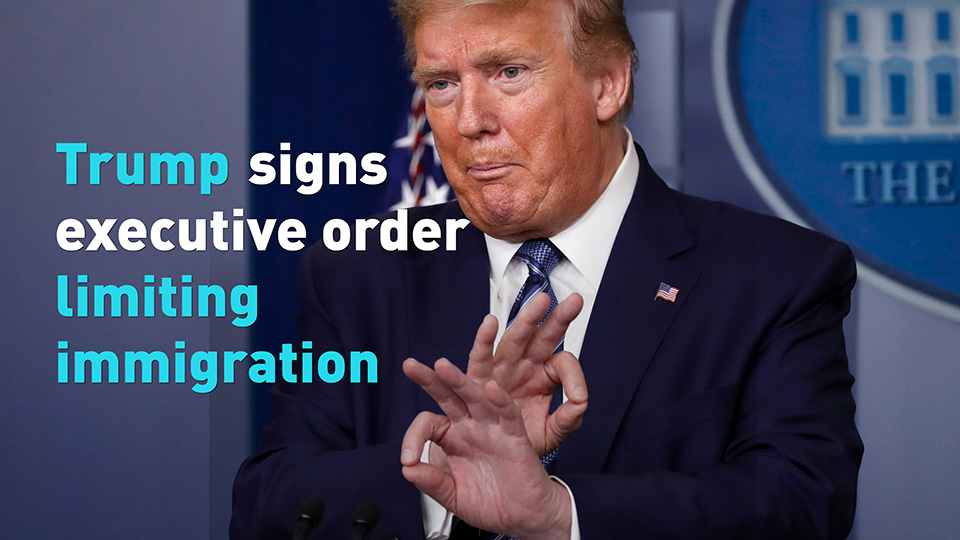
U.S. President Donald Trump signed an executive order on Wednesday temporarily blocking immigrants into the country for 60 days.
The order will pause the issuance of green cards but would not apply to those entering on a temporary basis.
His order intends to protect unemployed American workers from competing with newly arrived immigrants in the job market as the U.S. struggles to restart its economy amid the spread of COVID-19. Trump also said he would consider extending the immigration suspension and add more restrictions depending on the economic conditions.
This comes as more than 22 million Americans have lost their jobs and filed unemployment claims during the pandemic.
Jessica Vaughan, Director of Policy Studies at the Center for Immigration Studies, a research institute based in Washington, D.C., gave positive comments on Trump's order. She said the immigration ban would "instantaneously create" job opportunities for Americans.
But opponents criticized the move saying Trump appeared "more interested in fanning anti-immigrant flames than in saving lives" and that he hoped to win the November presidential election again by playing to the immigration issue as he did in 2016.
There have been sweeping immigration changes over the past month even before this executive order. The U.S. State Department has temporarily stopped processing routine visas at U.S. embassies and consulates due to the virus. U.S. borders with Mexico and Canada have also been closed to eliminate non-essential travel. Asylum and refugee admissions have also been blocked.
Check out The China Report, our new weekly newsletter. Subscribe here!