- Home
- China
- World
- Europe
- Politics
- Business
- Opinions
- Tech & Sci
- Culture
- Sports
- Travel
- Nature
- Picture
- Video
- Live
- TV
- Specials


Share






Copied
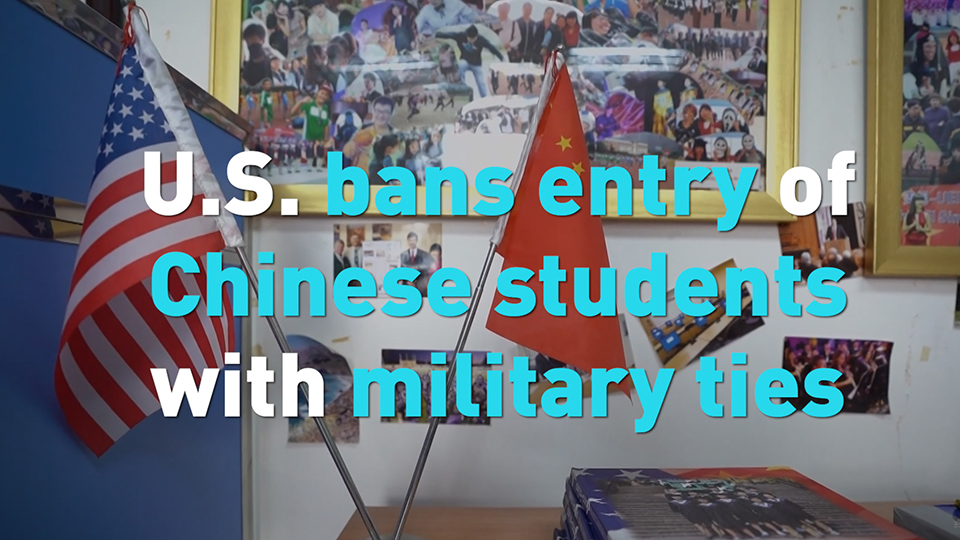
A new U.S. ban on Chinese students with suspected links to the People's Liberation Army (PLA) has raised concerns among research leaders in the U.S.
The ban was signed by President Donald Trump on May 29 and went into effect June 1. It mainly targets post-graduate students and post-doctorate researchers from China, aiming to block Chinese students from learning sensitive and emerging technologies from the U.S. and passing this knowledge on to China's military.
The U.S. secretary of state has the right to determine which students would be banned specifically. According to anonymous U.S. officials quoted in U.S. media reports, the ban targets students from seven military-affiliated universities in China, including Northwestern Polytechnical University, Harbin Engineering University, Harbin Institute of Technology, Beihang University (formerly known as Beijing University of Aeronautics and Astronautics), University of Aeronautics and Astronautics, Beijing Institute of Technology, Nanjing University of Science and Technology and Nanjing University of Aeronautics and Astronautics.
The ban does not apply to lawful permanent residents of the U.S. or spouses of U.S. citizens and lawful permanent residents.
Many researchers in the U.S. oppose this ban. They say most graduate research assistants in the U.S. universities are international students, and many of them are from China. Without them, they argue, American universities will be hurt through the loss of their important contributions to campus research. They also say American universities may suffer financially without the steady stream of tuition revenue these students provide.
How has this ban impacted Chinese students in general, undergraduate candidates included, who want to go to the US to study? Learn more.
Check out The China Report, our new weekly newsletter. Subscribe here!