- Home
- China
- World
- Europe
- Politics
- Business
- Opinions
- Tech & Sci
- Culture
- Sports
- Travel
- Nature
- Picture
- Video
- Live
- TV
- Specials


Share






Copied
U.S. President Donald Trump and the Centers for Disease Control and Prevention are clashing over guidelines on how to reopen K-12 schools during the COVID-19 pandemic.
After President Trump tweeted his disagreement with the CDC's guidelines on social media, Vice President Mike Pence said the agency would issue new guidelines the following week.
But on Thursday, Dr. Robert Redfield, the head of the CDC, said they would not issue new guidelines and instead add more reference documents.
In a tweet, Trump called the guidelines "tough & expensive."
What are these guidelines exactly? Let's break them down, according to the CDC and USA Today.
click right to read more
click right to read more
click right to read more
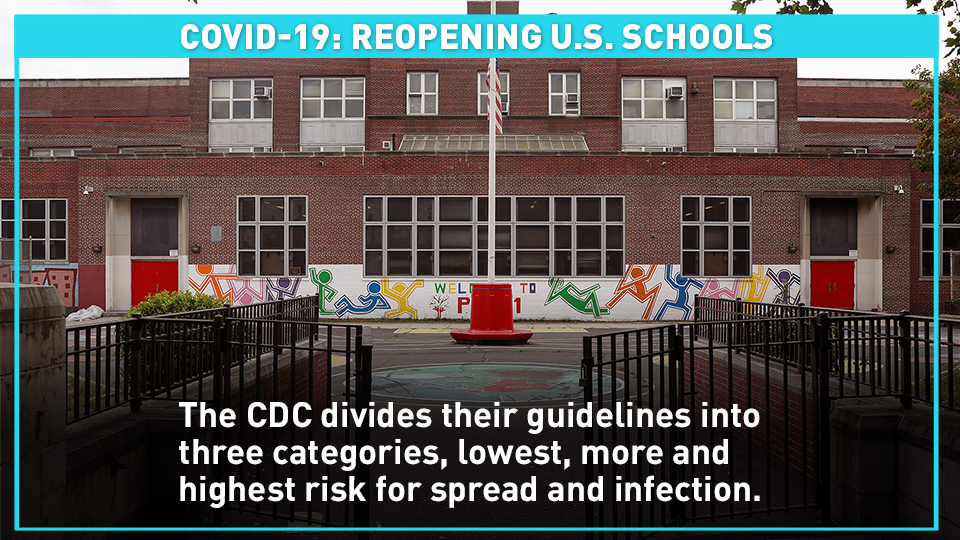
The CDC divides their guidelines into three categories, lowest, more and highest risk for spread and infection:
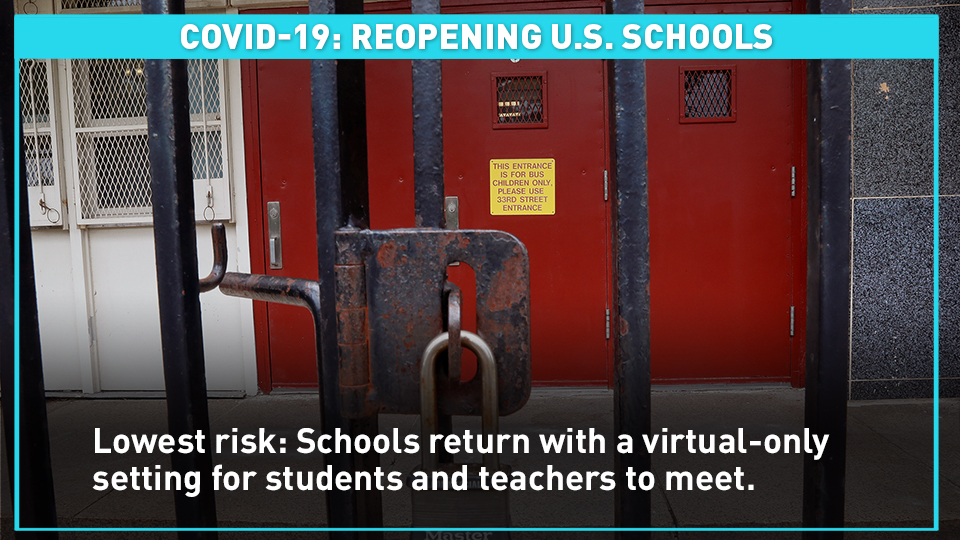
Lowest risk: Schools return with a virtual-only setting for students and teachers to meet.
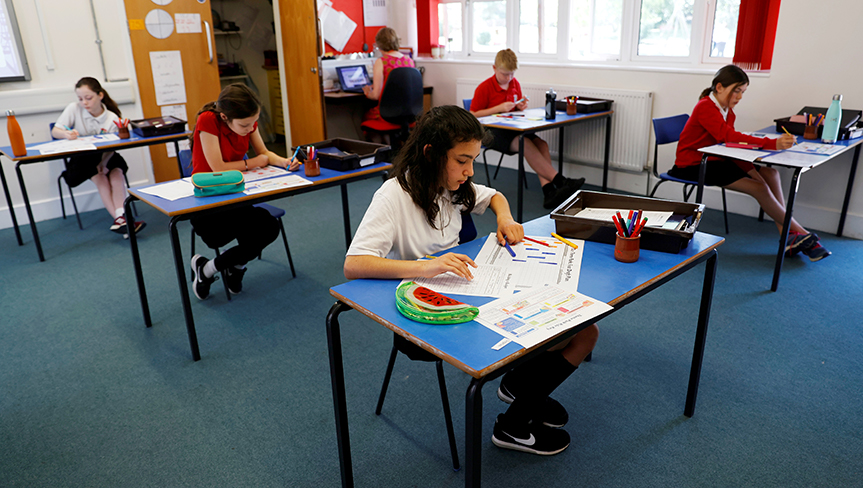
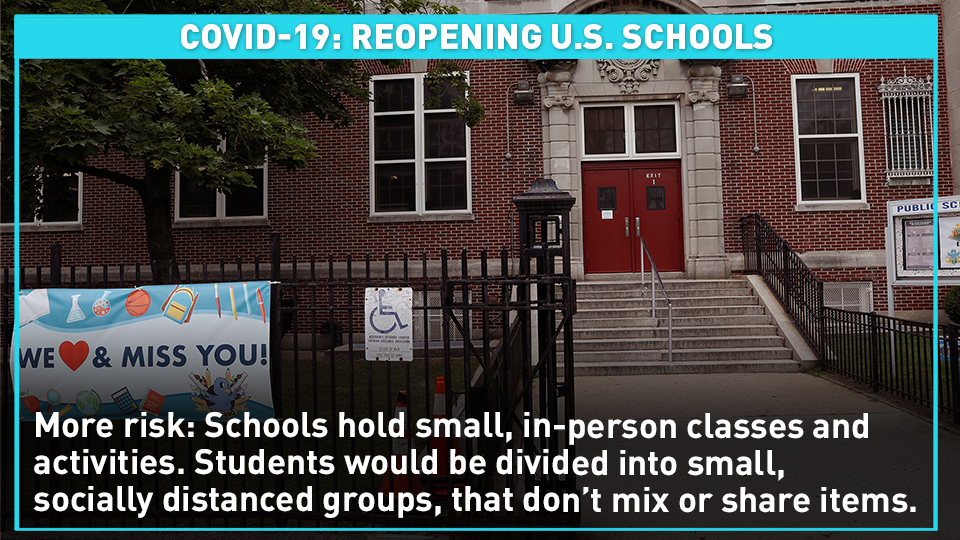
More risk: Schools hold small, in-person classes and activities. Students would be divided into small, socially distanced groups, that don’t mix or share items.
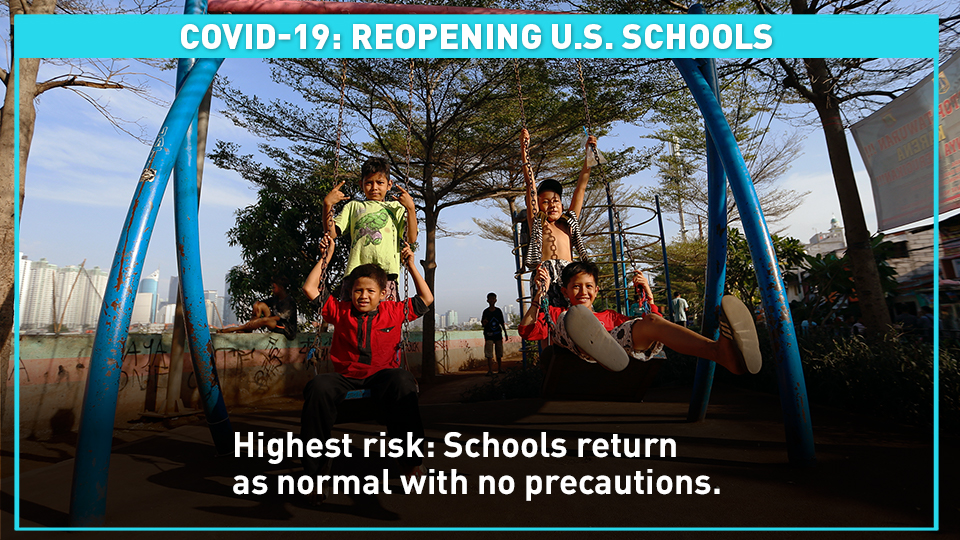
Highest risk: Schools return as normal with no precautions.

click right to read more
click right to read more
The CDC guidelines also detail basic cleanliness and safety procedures:
-Wash hands regularly
-Social distance
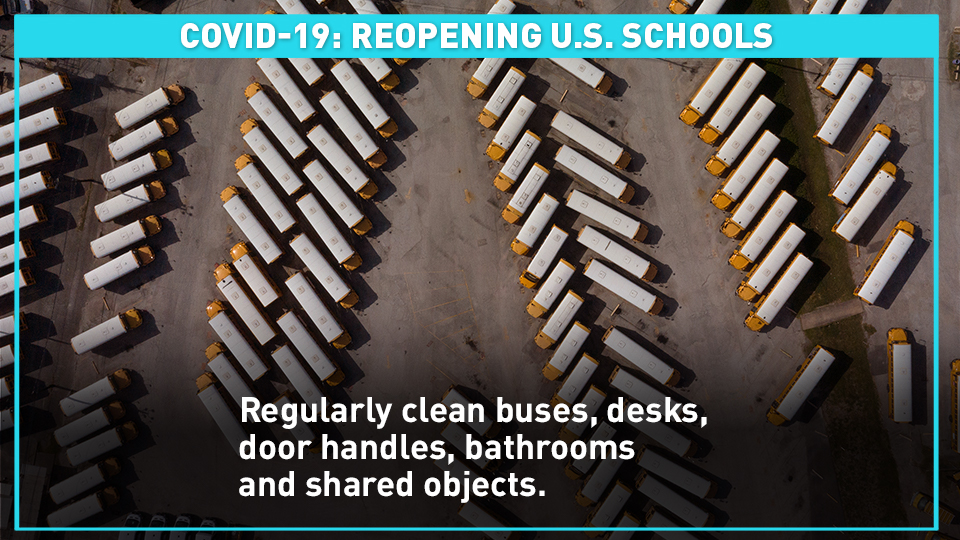
-Regularly clean buses, desks, door handles, bathrooms and shared objects
-"Face coverings should be worn by staff and students (particularly older students) as feasible, and are most essential in times when physical distancing is difficult."
-Student belongings should be stored separately
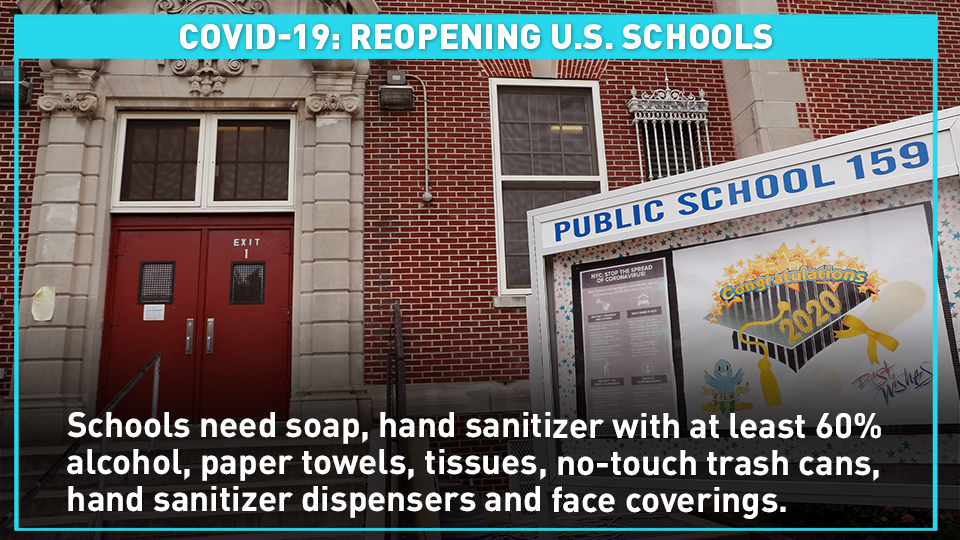
-Schools need soap, hand sanitizer with at least 60% alcohol, paper towels, tissues, no-touch trash cans, hand sanitizer dispensers and face coverings.
click right to read more
click right to read more
click right to read more
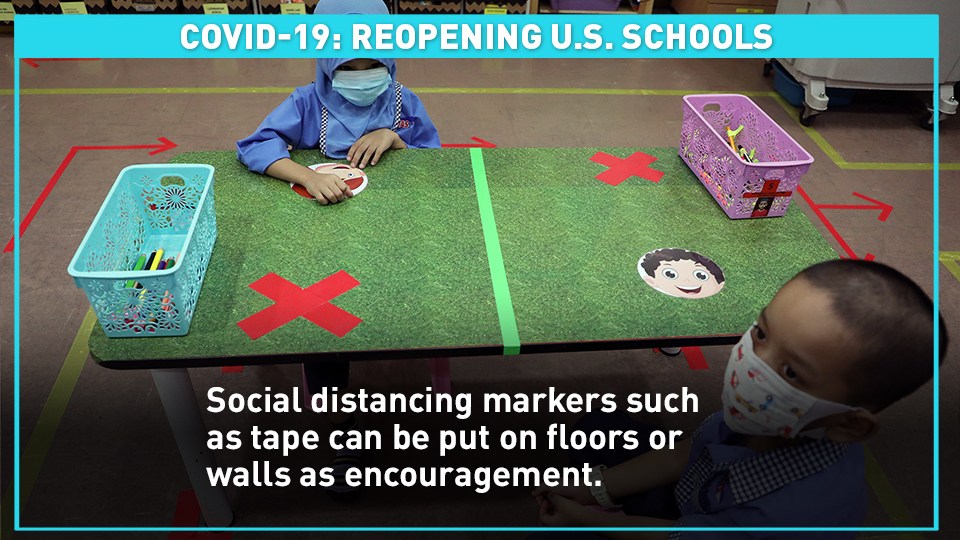
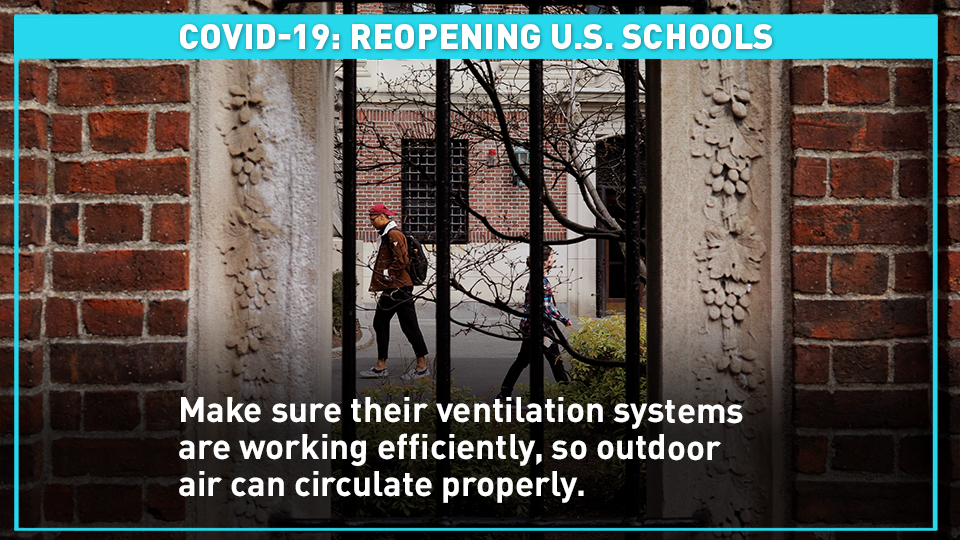
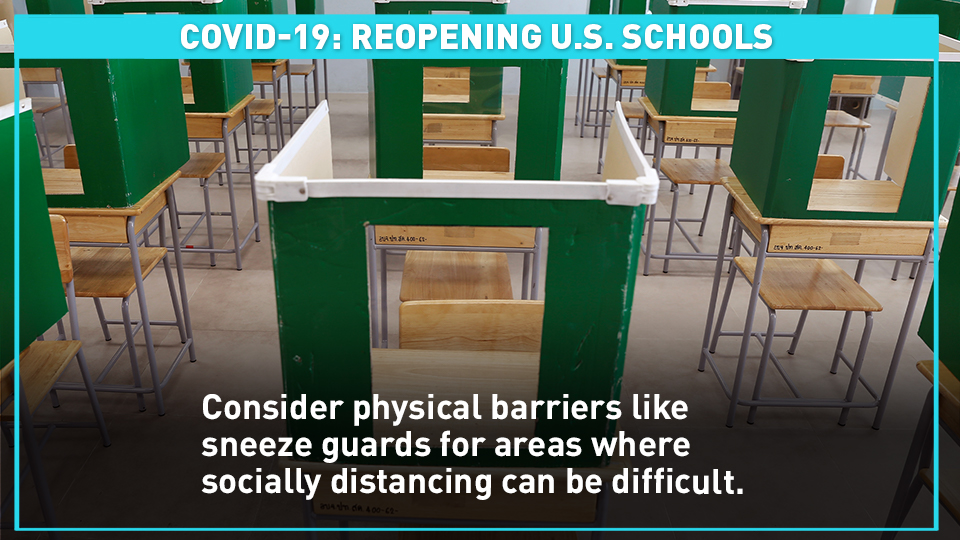
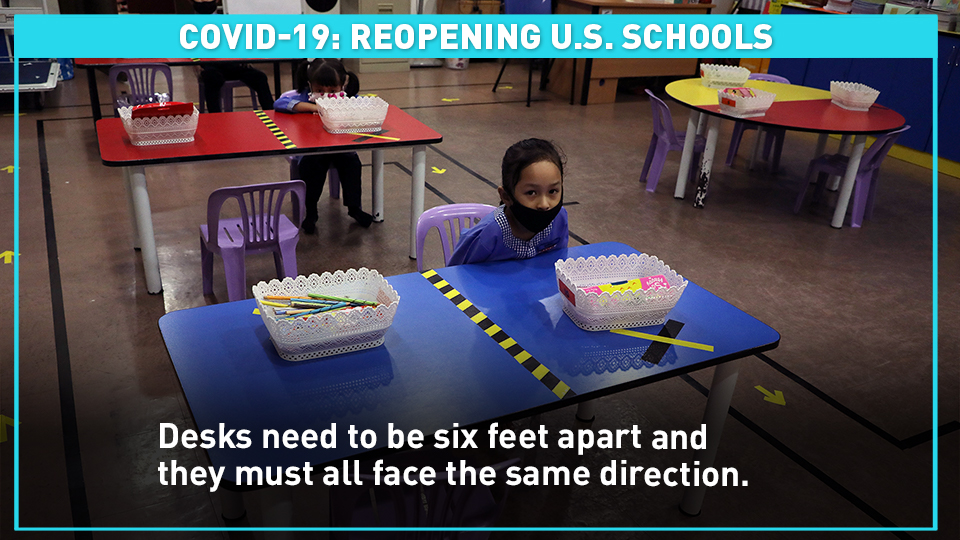
Schools will also have to make physical changes such as:
-Make sure their ventilation systems are working efficiently, so outdoor air can circulate properly.
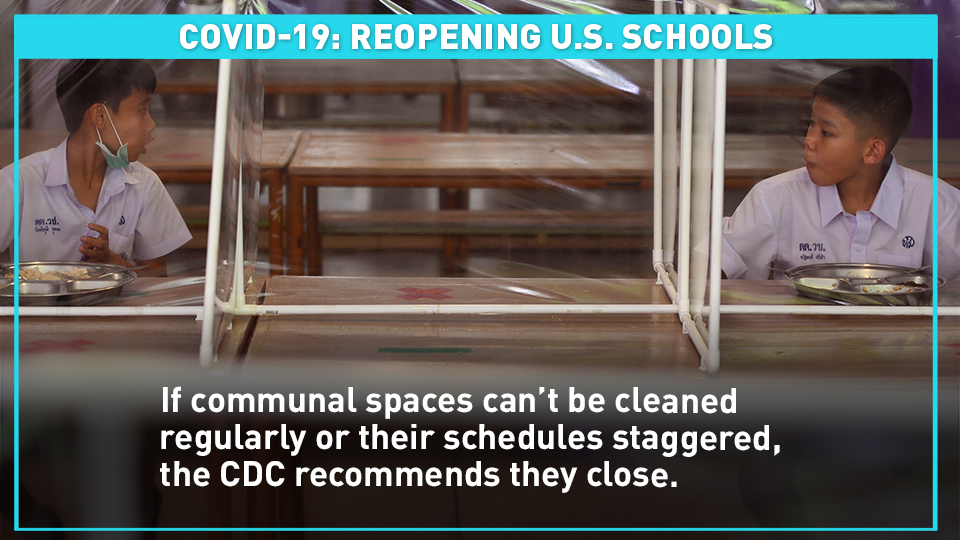
-Consider physical barriers like sneeze guards for areas where socially distancing can be difficult.
-Desks need to be six feet apart and they must all face the same direction.
-Social distancing markers such as tape can be put on floors or walls as encouragement.

click right to read more
click right to read more
Other changes:
-Staggered class schedules, lunch hours, pick-ups and drop-offs.
-Students divided into groups should have dedicated staff.
-For bus transportation, students should sit one per row or skip rows.
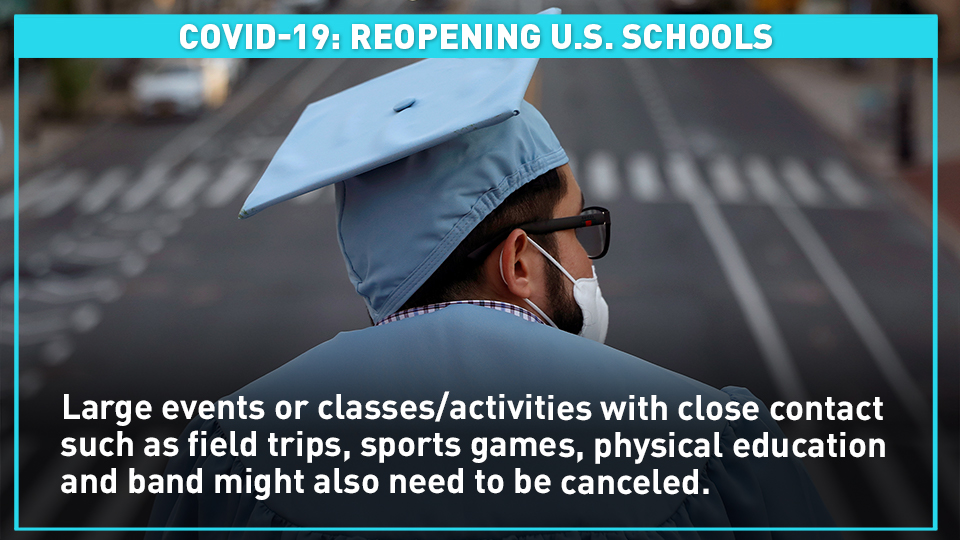
-Large events or classes/activities with close contact such as field trips, sports games, physical education and band might also need to be canceled.
-If communal spaces can't be cleaned regularly or their schedules staggered, the CDC recommends they close. This includes playgrounds and cafeterias.
-Students should bring their own lunches and eat in small groups in a classroom. Students who are served meals, should be done so individually or be given their lunch in its own packaging. Cafeteria workers must wear gloves when serving food.
-Daily health checks, temperature screenings and symptom checking.
As schools across the country face significant challenges with reopening, President Trump has left schools to decide on their own, how to do so.
Even though the CDC issued these guidelines, online learning and childcare are hurdles the CDC cannot address.
Online learning can lead to setbacks for disadvantaged students and parents who are unable to supervise the online classes.
Many higher-earning professionals have the ability to work remotely and supervise their children but many lower-paid service workers don’t have this option.
There is also concern for how homeless or housing-insecure students and families would be able to participate in fully online or hybrid learning.
While returning to school can bring health risks and challenges, experts are also worried about kids staying home. Experts worry, children who are victims of child abuse will go unnoticed and a student's mental health could suffer with a shift to learning remotely.
With all of these challenges, many school districts are proposing hybrid models, where students learn online and in-person.
But there are still concerns for working parents and their schedules.
However, if schools decide to reopen, USA Today reports, the CDC recommends they practice good communication with their students, parents, faculty and local health officials. Schools are urged to educate their students and faculty about COVID-19 and tell their school if they experience symptoms, test positive, or are exposed to someone infected.
If someone does test positive, the CDC recommends schools close for two to five days. Schools should also have plans in place to provide student, staff and family support to those who may need it during the pandemic.
Check out The China Report, our new weekly newsletter. Subscribe here!