- Home
- China
- World
- Europe
- Politics
- Business
- Opinions
- Tech & Sci
- Culture
- Sports
- Travel
- Nature
- Picture
- Video
- Live
- TV
- Specials


Share







Copied
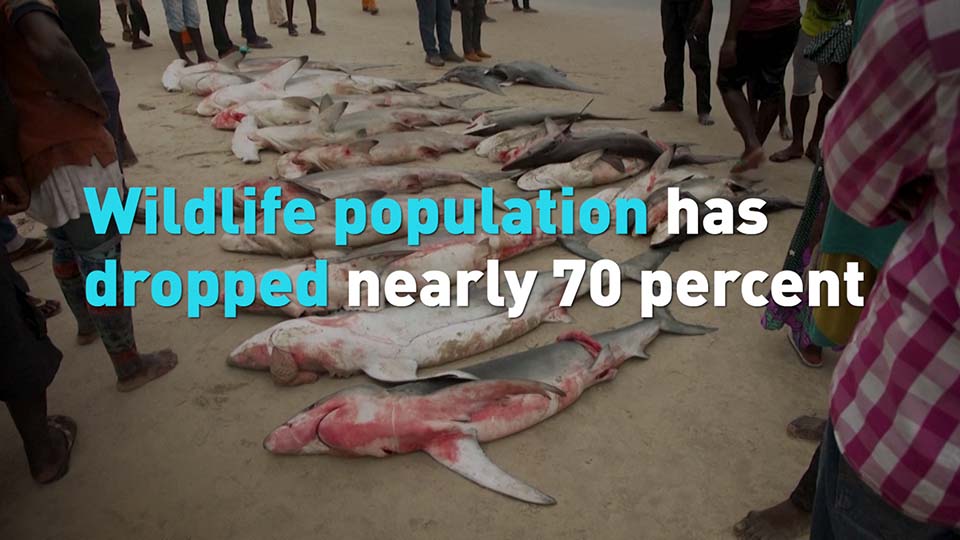
The average population size of wildlife animals has declined by 68 percent since 1970, according to a World Wildlife Fund (WWF) report published on Thursday.
The drop has been seen across thousands of species including mammals, birds, amphibians, reptiles and fish.
"This is a negative trend. We are seeing this accelerating over the last 20 years. The last Living Planet Report was nearly 60 percent, we're now about 70 percent, now it's 68…It is very serious and that what needs to be changed, instead of being sad about nature loss or extinction or wildlife decline, we should be worried and that should trigger action," Marco Lambertini, the Director General of WWF International said.
The report also shows that 75 percent of the planet's ice-free-land had been largely altered due to human activity and most of the world's oceans have been polluted.
The WWF cites the quick pace of deforestation for farming and the wildlife trade for the drop.
Scientists worry the decline will affect agricultural production and threaten food security and the livelihoods of billions of people.
Brazil has hit record levels in land clearance and deforestation in recent years.
The report said more needs to be done to save wildlife.
It urges the world to transform unsustainable food systems and shift people's diets to a "lower share of animal calories."
Check out The China Report, our new weekly newsletter. Subscribe here!