- Home
- China
- World
- Asia-Pacific
- Americas
- Europe
- Middle-East and Africa
- Politics
- Business
- Opinions
- Tech & Sci
- Culture
- Sports
- Travel
- Nature
- Picture
- Video
- Live
- TV
- Specials
- Learn Chinese


Share







Copied

"The Art of the Party" series shows you the historic moments of the Party in the run-up to the 100th anniversary of the Party's founding.
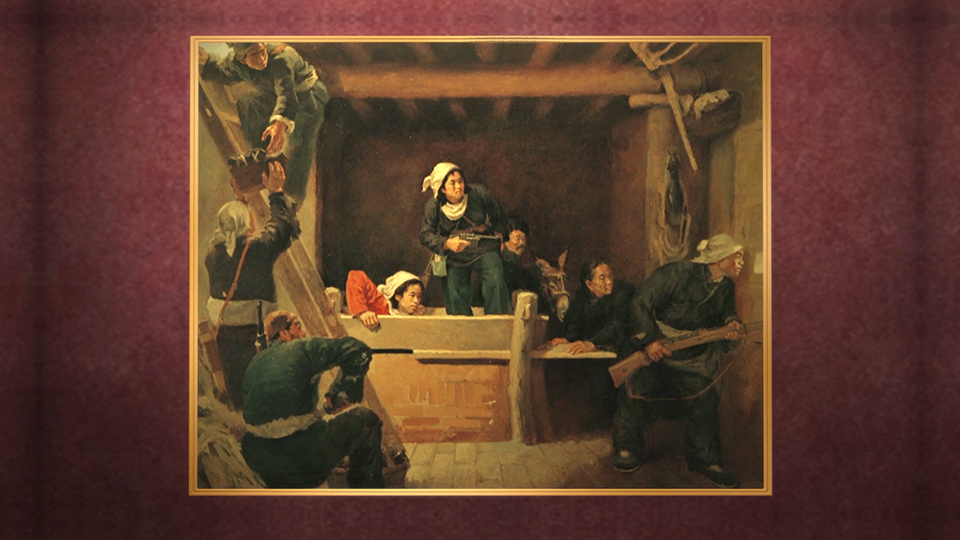
To repel Japanese invaders during World War Two, Chinese peasants resorted to tunnel warfare.
In 1941, the Sino-Japanese War was in its fifth year. The Chinese call it the War of Resistance against Japanese Aggression.
That year, the fighting entered a decisive stage. Chinese forces refused to surrender.
Japanese attempts to crush them became increasingly cruel. Chinese Communist troops and peasant guerillas revived the ancient art of tunnel warfare.
In rural areas, households and villages were connected through a system of underground tunnels.
Villagers could enter the tunnels from their homes to hide from enemy attacks.
Guerilla fighters adapted the tunnels for fighting. They dug small gun holes for snipers to fire on the enemy. The tunnels were expanded into underground fortresses.
Chinese forces used them to slip into enemy territory and launch surprise attacks. Sheltered and unseen, guerilla fighters maneuvered from one part of the battleground to another. Swift and silent, they ambushed Japanese troops from unexpected places.
The tunnels turned villages in Northern China's Hebei Province into decisive battlefields in China's fight to defeat the Japanese.
Check out The China Report, our new weekly newsletter. Subscribe here!
