- Home
- China
- World
- Asia-Pacific
- Americas
- Europe
- Middle-East and Africa
- Politics
- Business
- Opinions
- Tech & Sci
- Culture
- Sports
- Travel
- Nature
- Picture
- Video
- Live
- TV
- Specials
- Learn Chinese


Share







Copied
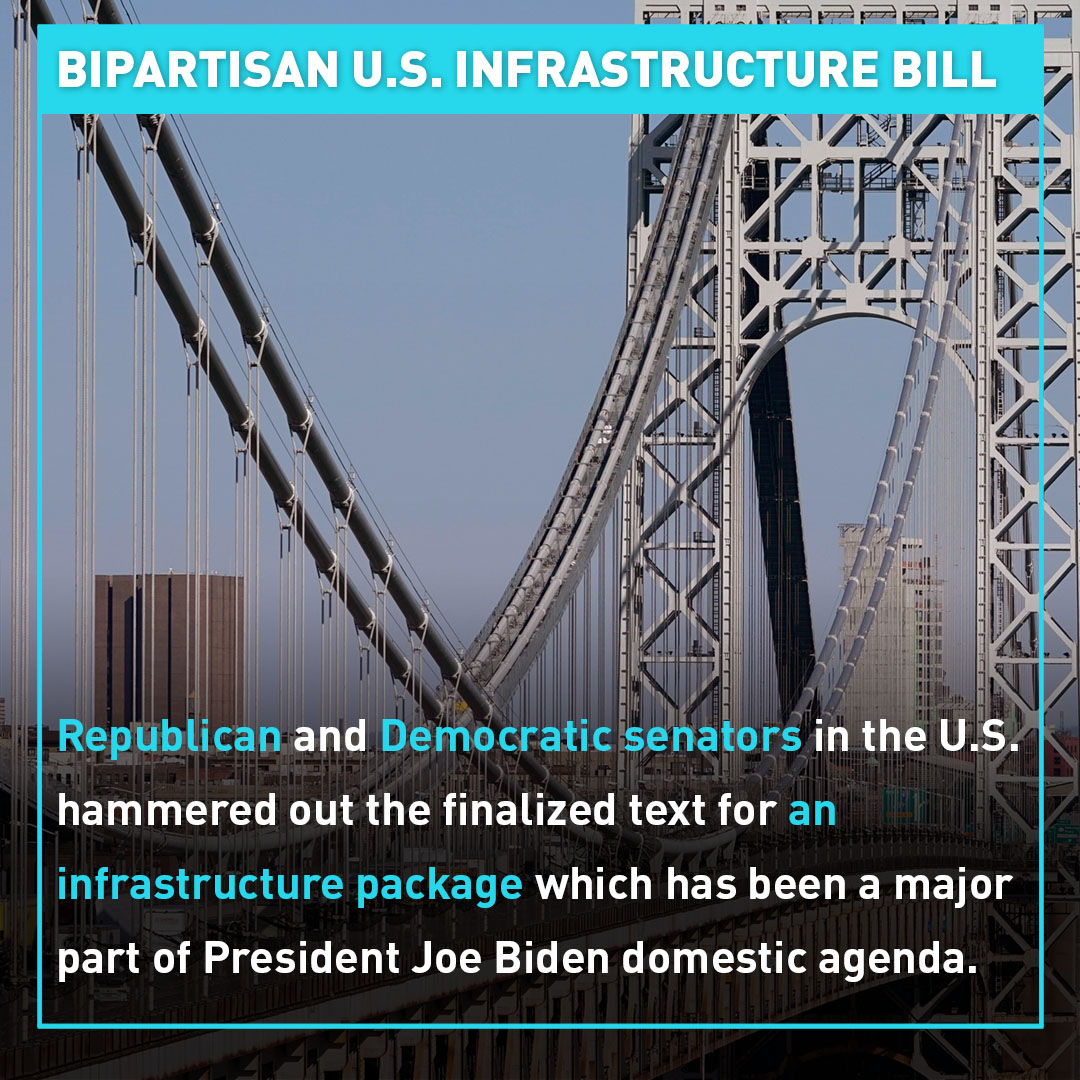
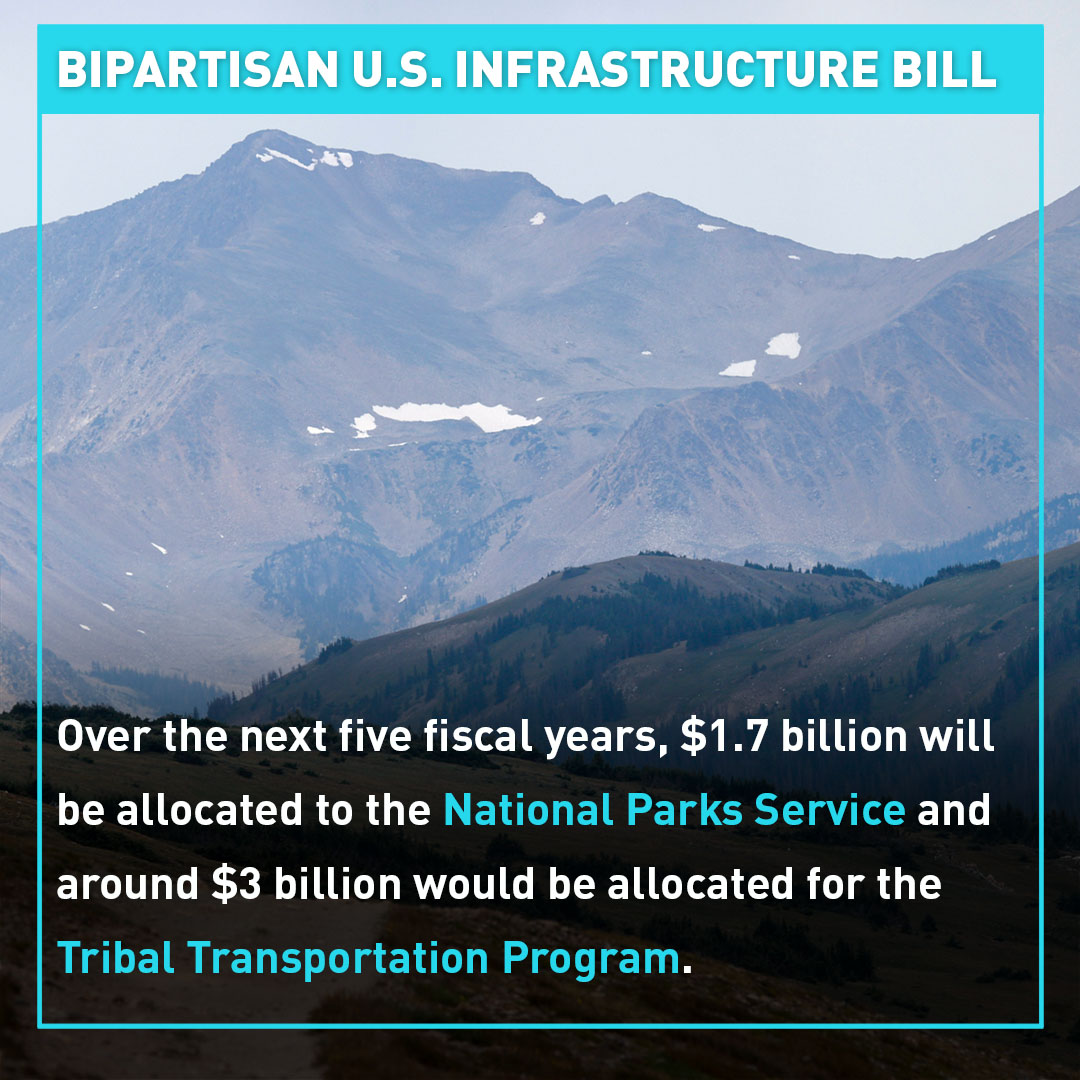
U.S. Democratic and Republican senators have hammered out the final details of a bipartisan infrastructure plan... a priority of President Joe Biden's domestic agenda.
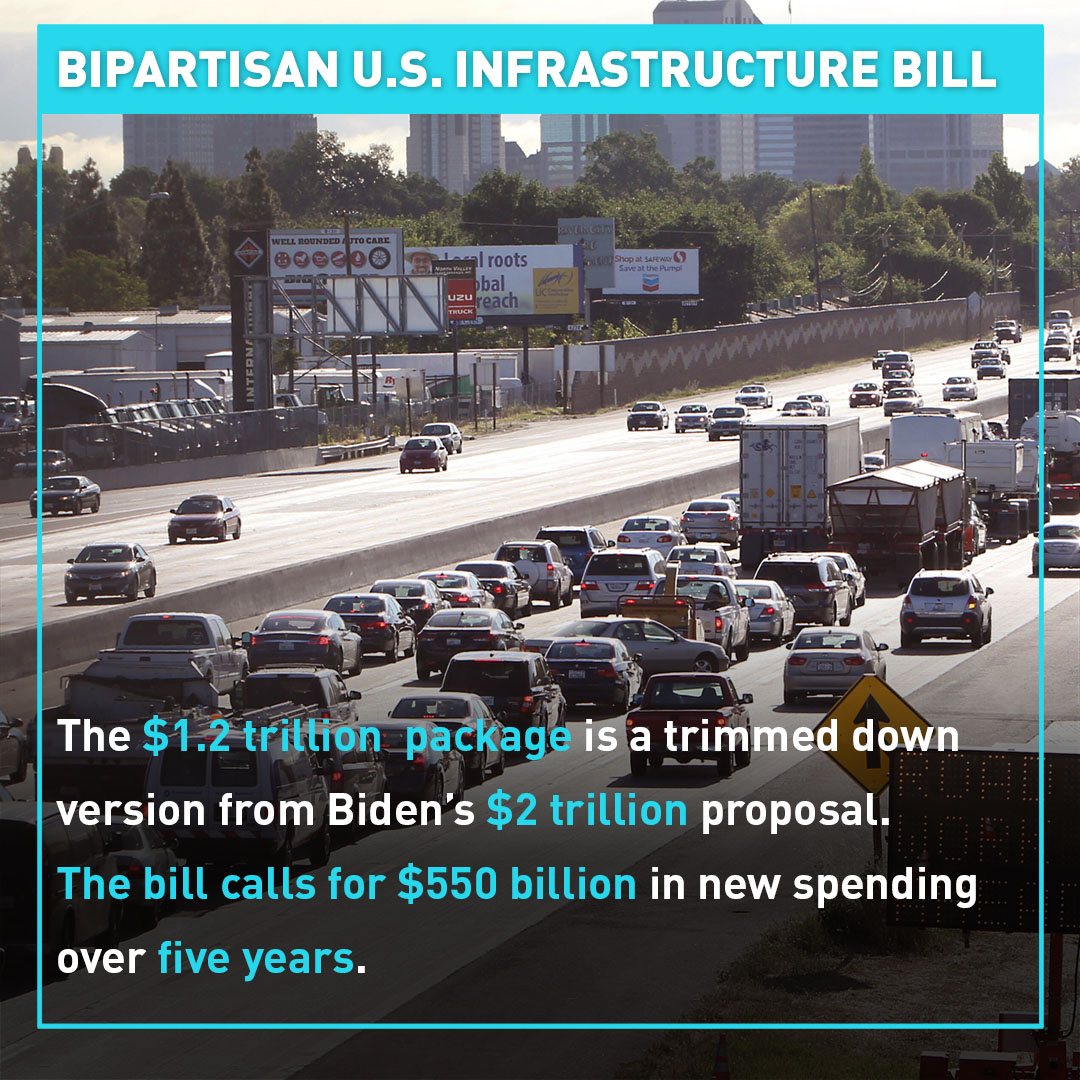
The 2,700-page $1.2 trillion package, called the Infrastructure Investment and Jobs Act, was a narrower version of the $2 trillion measure President Biden wanted at the beginning of the year.
The latest developments end weeks of negotiations between senators and the White House.
Senate Majority Leader Chuck Schumer, D-N.Y. is speeding up consideration for the bill, hoping for a final vote “in a matter of days.”
According to the Associated Press, the bipartisan bill calls for $550 billion in new spending over five years, higher than projected federal levels.
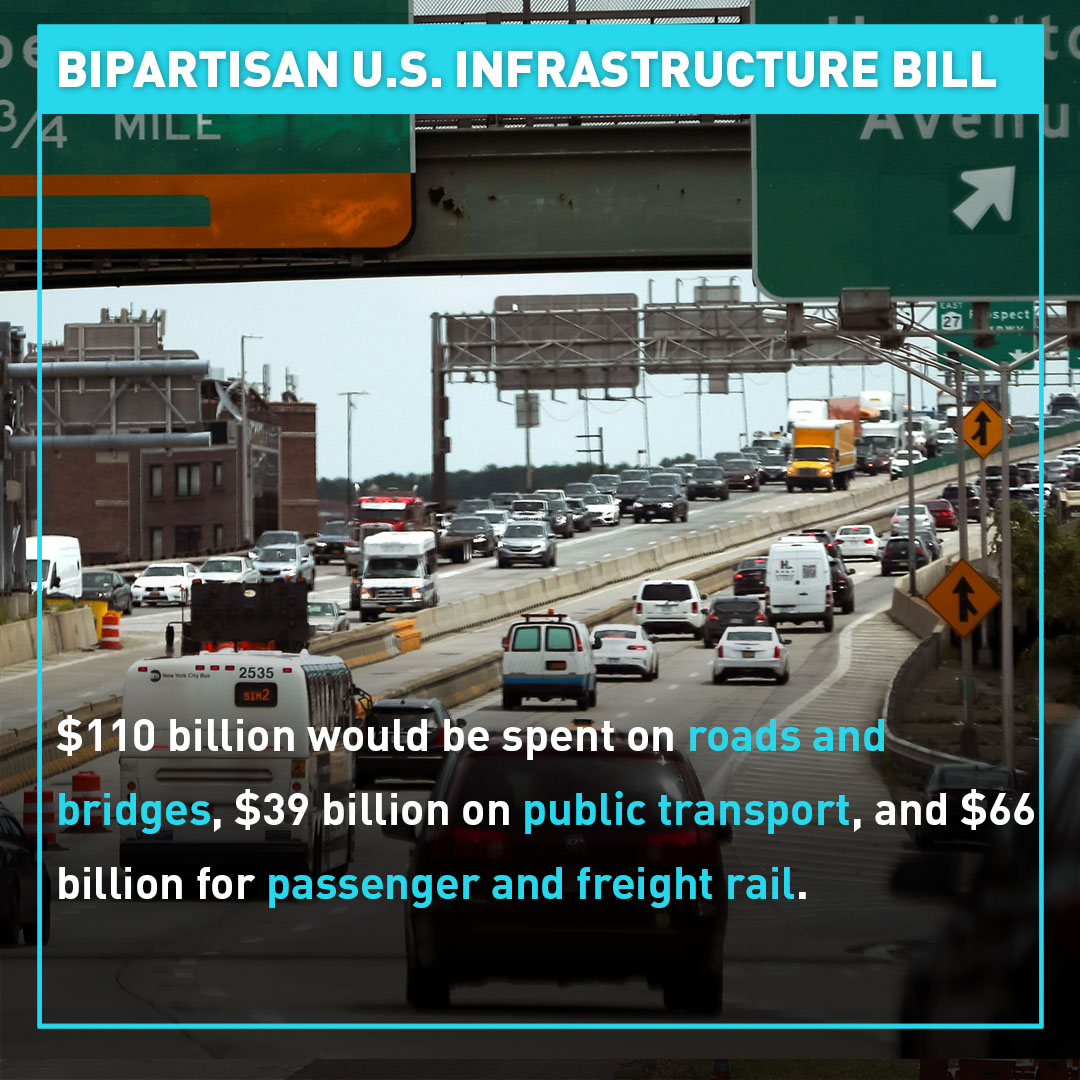
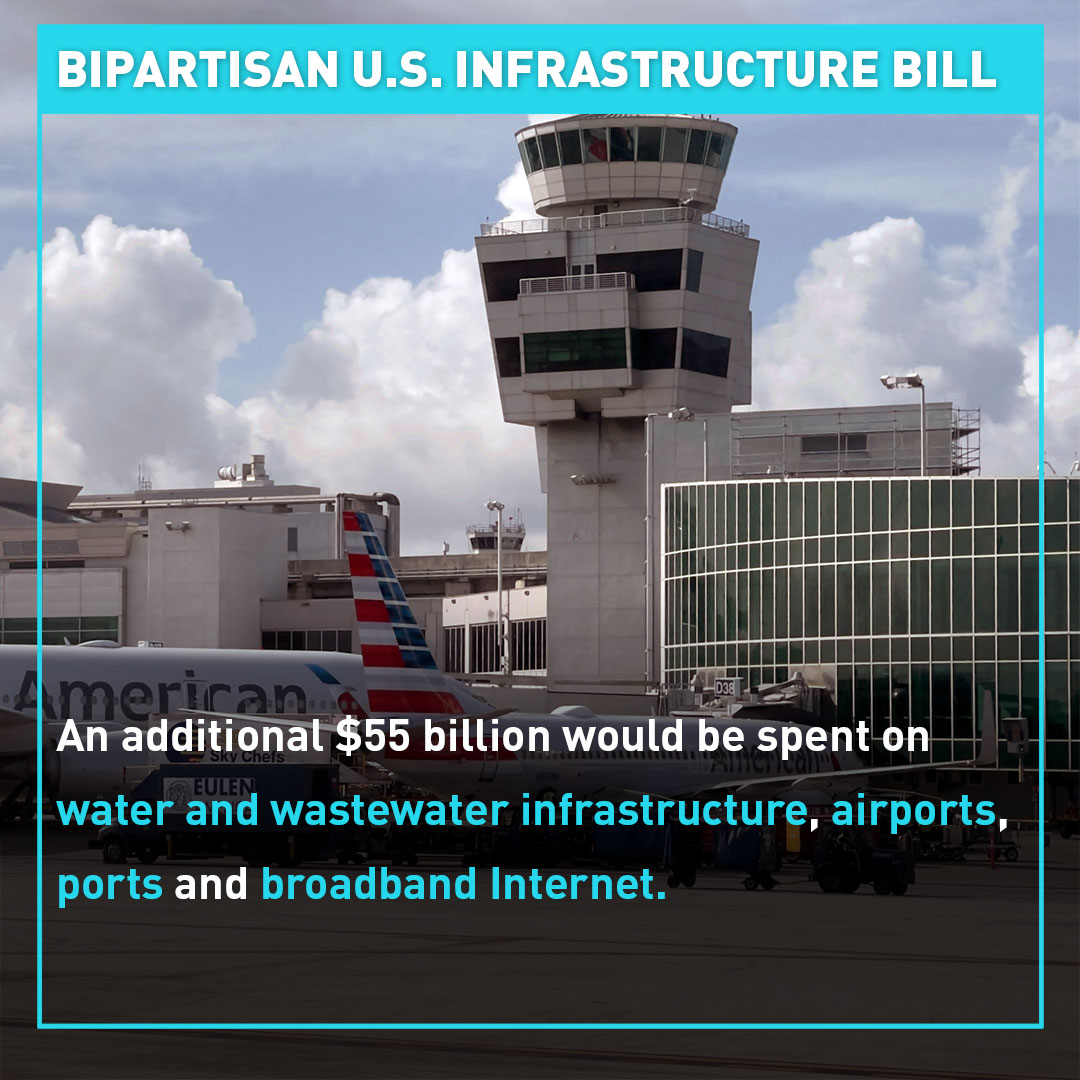
Specifically, the new investments would provide $110 billion to repair roads and bridges, $39 billion for public transit and $66 billion for passenger and freight rail. Another $55 billion would be spent on water and wastewater infrastructure, along with funding for airports, ports and broadband Internet.
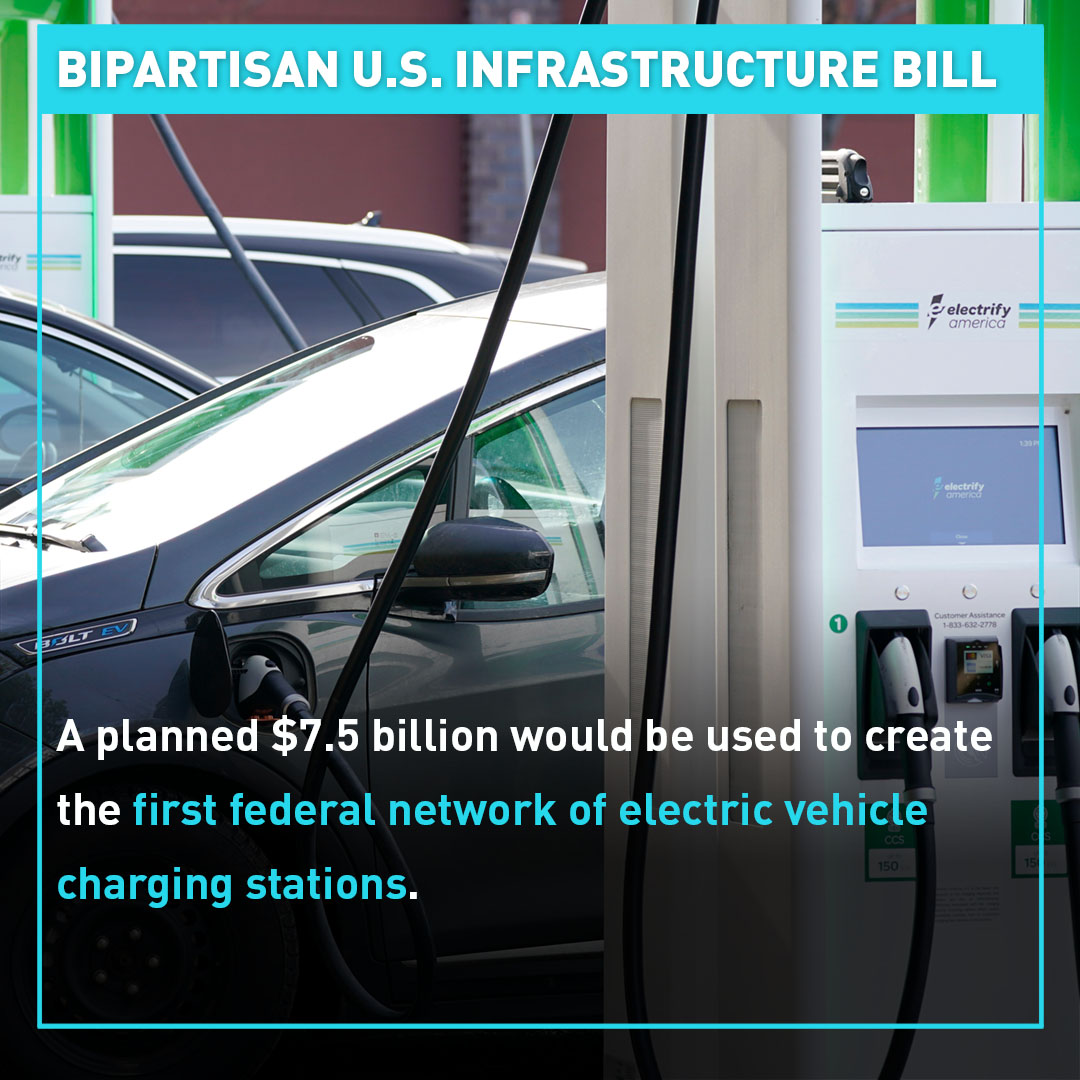
$7.5 billion would be allocated to create the first federal network of electric vehicle charging stations.
The proposal would be financed by unspent COVID-19 relief funds, corporate user fees and tighter tax enforcement of crypto currency, according to the White House.
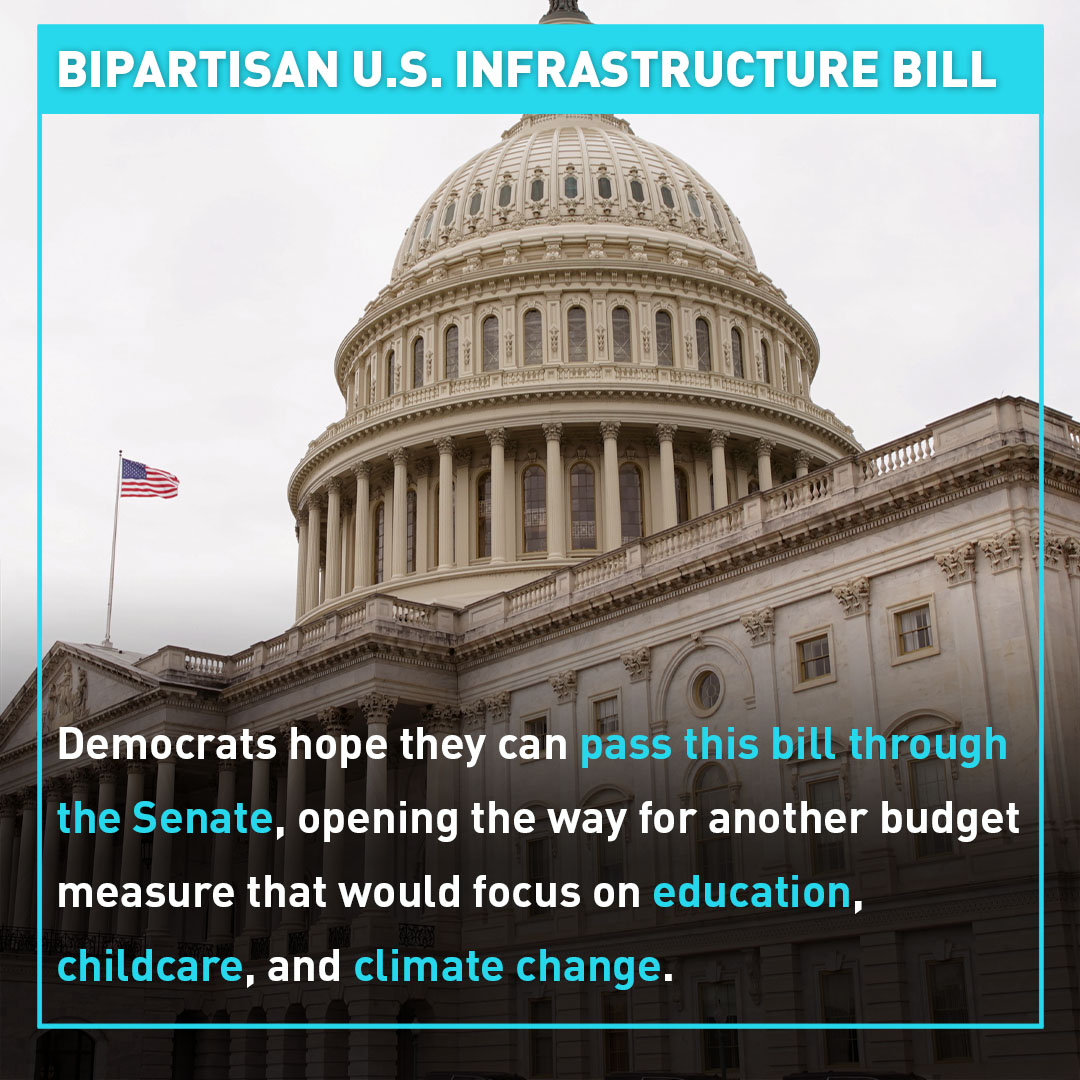
Passage would clear the way for another budget measure, a $3.5 trillion “human infrastructure” bill, proposed by Democratic leadership, which is focused on education, childcare, and climate change.
That bill would need to pass through Congress under a budget reconciliation procedure, which enables bills to pass the Senate with a simple majority and only support from Democrats.
There remain questions on how many Republicans will support the bill when it comes to the Senate floor, with some still criticizing the bill as too costly.
Check out The China Report, our new weekly newsletter. Subscribe here!
