- Home
- China
- World
- Asia-Pacific
- Americas
- Europe
- Middle-East and Africa
- Politics
- Business
- Opinions
- Tech & Sci
- Culture
- Sports
- Travel
- Nature
- Picture
- Video
- Live
- TV
- Specials
- Learn Chinese


Share







Copied
Click to see more
Click to see more
Click to see more
Click to see more
Click to see more
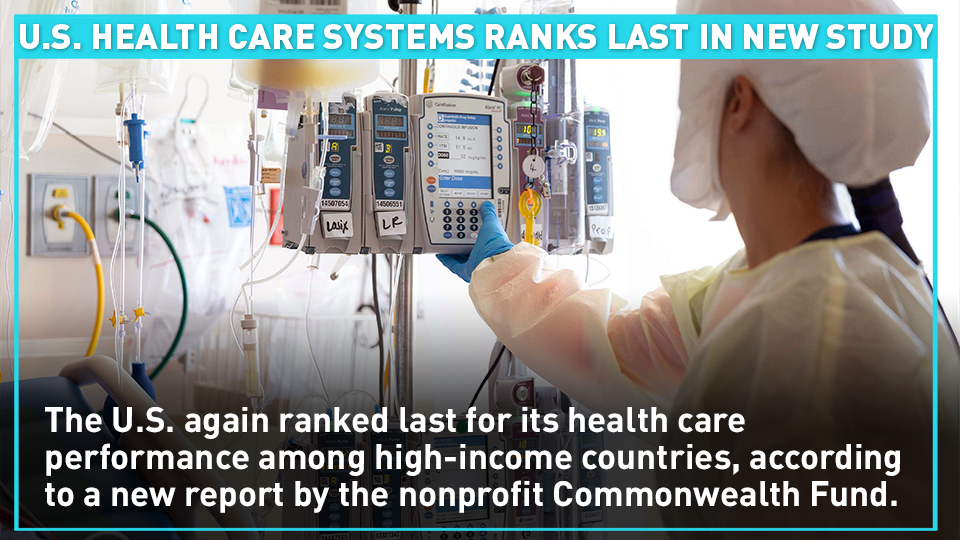
The U.S. again ranked last for its health care performance among high-income countries, according to a new report by the nonprofit Commonwealth Fund. It's the same ranking given the U.S. in six other studies done by the group since 2004.
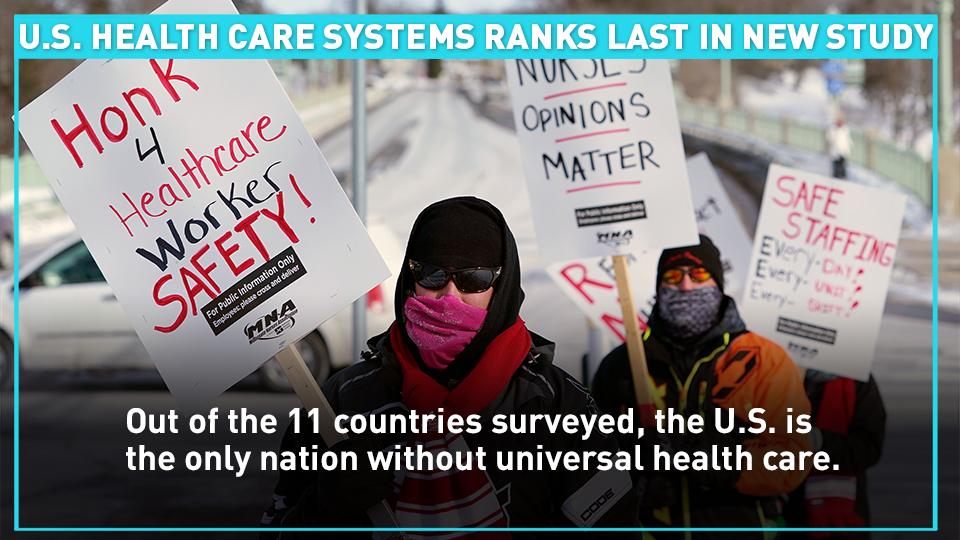
Out of the 11 countries surveyed, the U.S. is the only nation without universal health care.
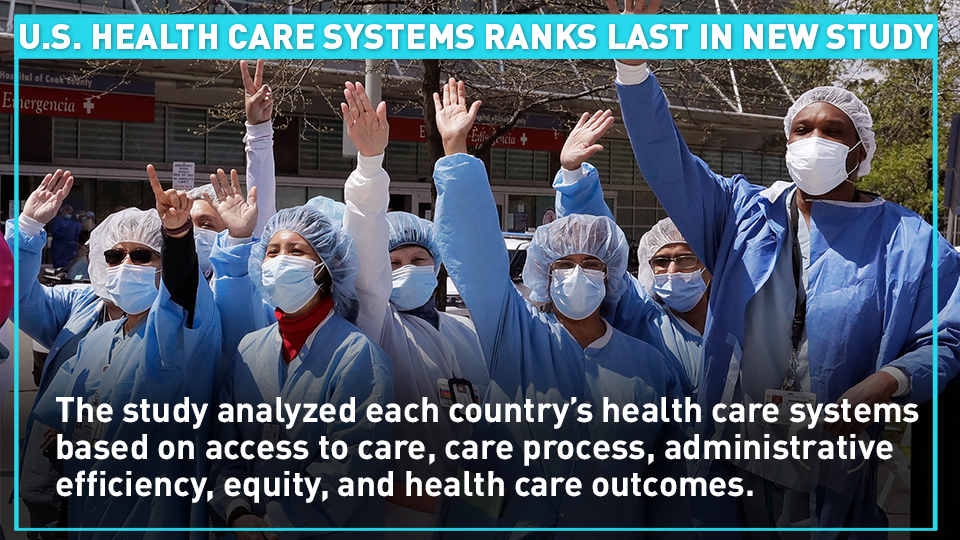
The study analyzed each country's health care systems based on access to care, care process, administrative efficiency, equity, and health care outcomes.
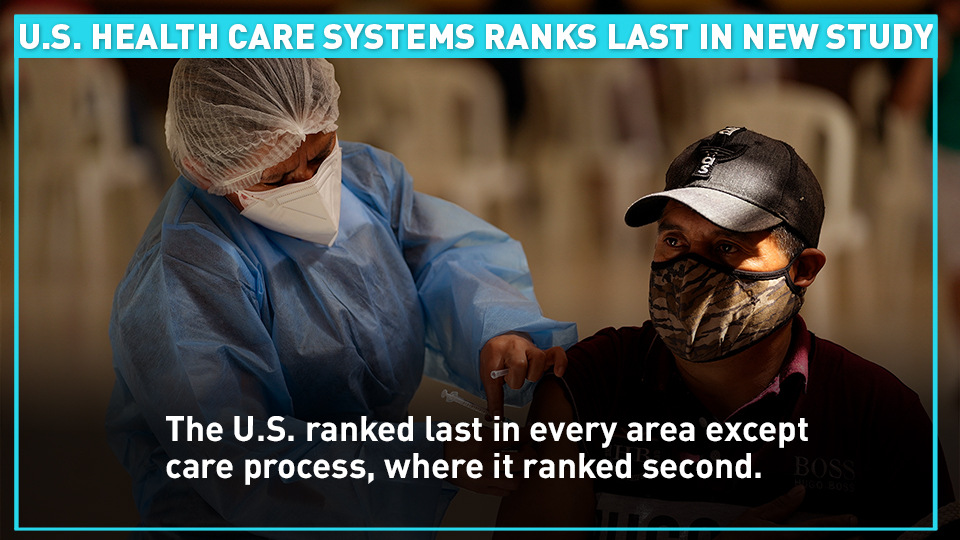
The U.S. ranked last in every area except care process, where it ranked second.
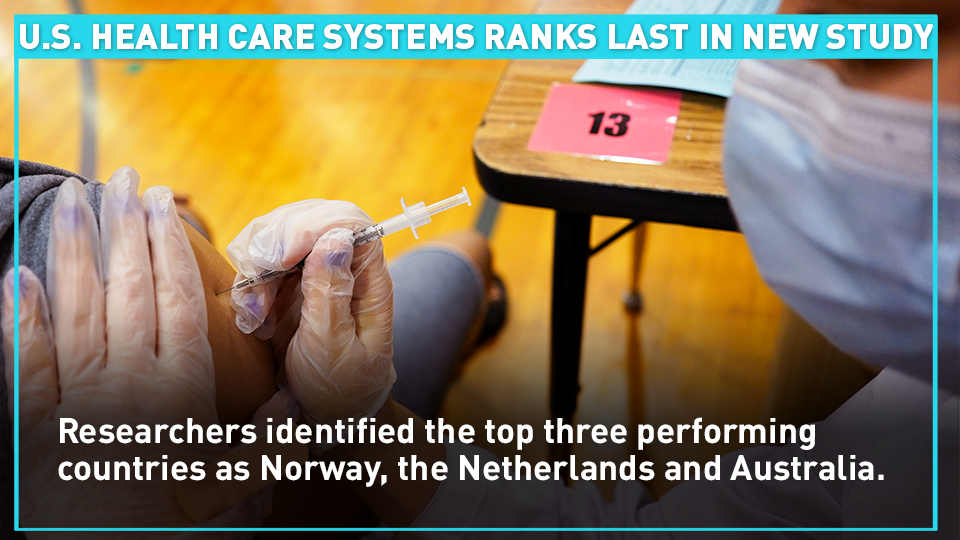
Researchers identified the top three performing countries as Norway, the Netherlands and Australia.
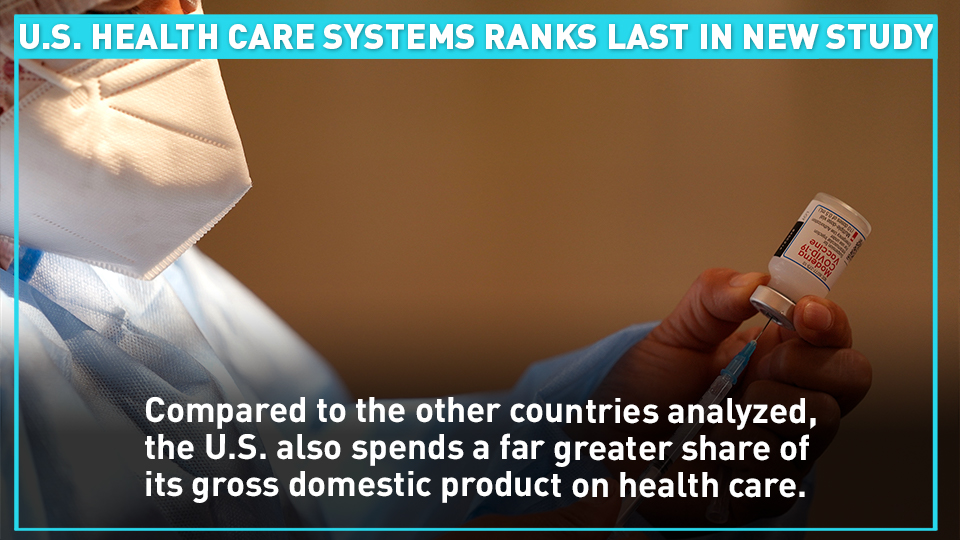
Compared to the other countries analyzed, the U.S. also spends a far greater share of its gross domestic product on health care.
"Far too many people cannot afford the care they need and far too many are uninsured, especially compared to other wealthy nations," David Blumenthal, president of the Commonwealth Fund said during a press briefing.
The study found half of lower-income U.S. adults reported not receiving medical care because of the cost.
Blumenthal said income inequality "profoundly" limits access to care in the U.S., more so than in any other country.
While some data used in the Commonwealth Fund came from 2020, most measures did not reflect the full impact of the COVID-19 pandemic.
The study concludes by pointing out how top performing countries differ from the United States: They provide universal coverage, invest in systems to equitably deliver health care services, reduce administrative burdens and invest in social services.
Check out The China Report, our new weekly newsletter. Subscribe here!
