- Home
- China
- World
- Asia-Pacific
- Americas
- Europe
- Middle-East and Africa
- Politics
- Business
- Opinions
- Tech & Sci
- Culture
- Sports
- Travel
- Nature
- Picture
- Video
- Live
- TV
- Specials
- Learn Chinese


Share







Copied
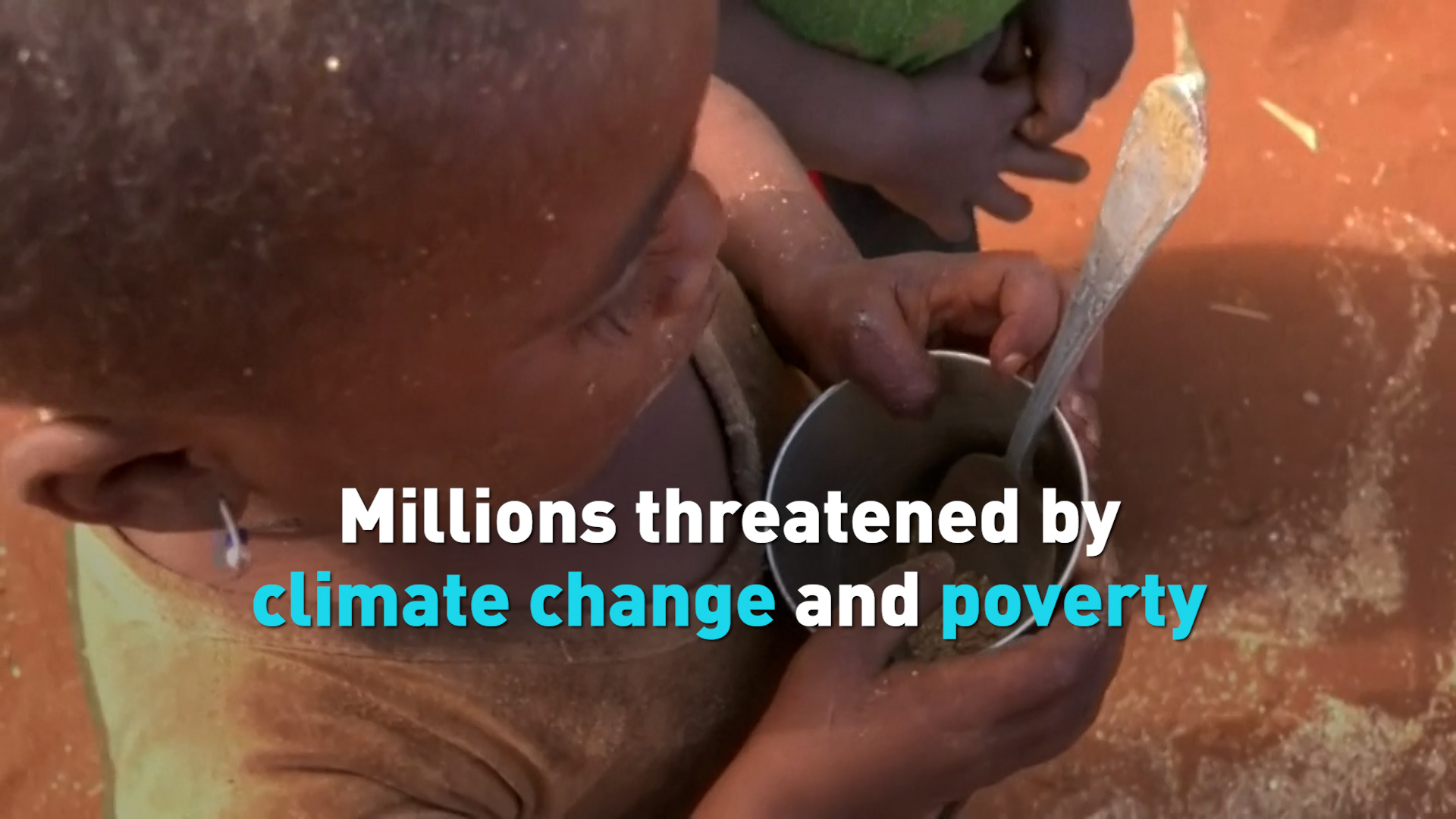
As the COP26 climate conference gets underway this weekend in Glasgow, Scotland, governments say they are running out of opportunities to cap global warming at the 1.5-2-degree Celsius limits set out by the Paris Climate Accords in 2015.
The stakes are high, and while climate change threatens the entire world, the most impoverished are likely to face the worst impacts of future environmental disasters.
People living in the poorest countries, like Haiti and Timor-Leste in Southeast Asia, would suffer greatly from climate change, due to limited financial resources.
The Network for Greening the Financial System (NGFS), a group of world central banks and financial supervisors, says that because much of the world’s poor live in tropical and low-lying regions they are already facing droughts and rising sea levels.
Research released last year by the World Bank found that 132 million people will be pushed into extreme poverty because of climate change by 2030.
But the impact will most likely vary among different regions.
Sub-Saharan Africa is expected to see rising food prices because of lower agricultural yields which will increase poverty. The World Bank points out that 63 percent of Malawian household income is spent on food and beverages.
In 2017, the U.N. reported that more than 1.3 billion people were living on deteriorating agricultural land, putting them at risk of hunger.
Research conducted by scientists at Vrije Universiteit Brussel in Belgium noted that 172 million children in sub-Saharan Africa are likely to face a six-fold increase in extreme climate disasters at the current rate of warming.
According to the humanitarian aid organization Mercy Corps, climate change is undermining development and leading to shortages of necessities, like food and water.
The two powerful hurricanes that swept through Latin America in November 2020 caused a humanitarian crisis, exacerbating the already high-levels poverty levels in countries like Guatemala, Honduras, and El Salvador, forcing many to attempt to migrate to the U.S.
Observers say climate change could increase competition over resources and increase ethnic tensions and violence.
A report from the International Committee of the Red Cross found that of the 25 countries most vulnerable to climate change, 14 were already dealing with major conflicts.
Check out The China Report, our new weekly newsletter. Subscribe here!
