- Home
- China
- World
- Asia-Pacific
- Americas
- Europe
- Middle-East and Africa
- Politics
- Business
- Opinions
- Tech & Sci
- Culture
- Sports
- Travel
- Nature
- Picture
- Video
- Live
- TV
- Radio
- Specials
- Learn Chinese


Share







Copied
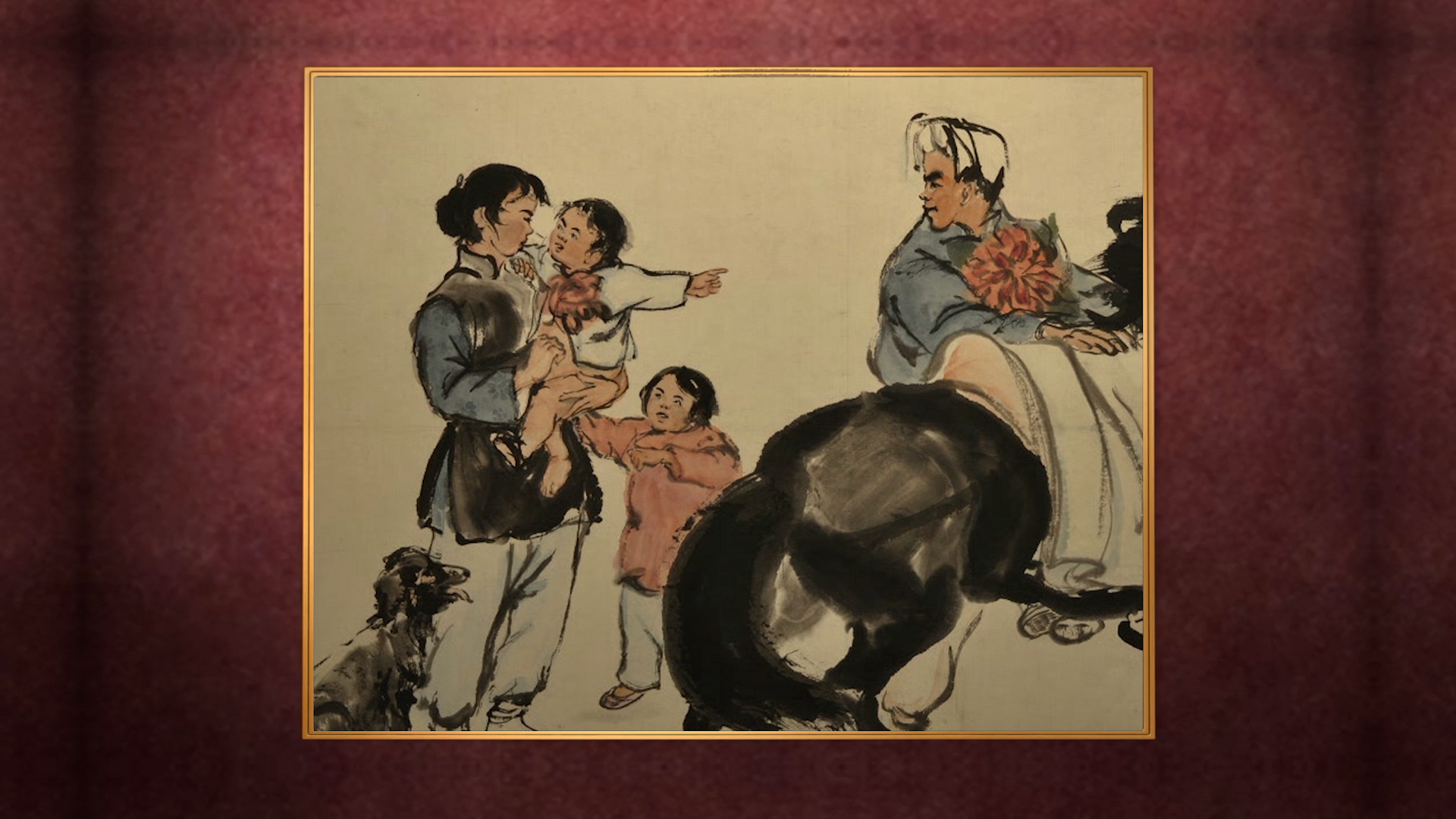
In 1950, artist Huang Zhou painted "Daddy Will Fight Chiang Kai-shek."
The painting depicts the spirit of the Chinese people as they actively support the Communist Army in their eagerness to end the Civil War.
Beginning in 1927, the Communist Party of China (CPC) and the Nationalist Party Kuomintang (KMT) were in a constant struggle for power.
Shortly after China defeated Japan in 1945, the Chinese Civil War resumed.
Over the years, the KMT gradually lost support due to their brutality and corruption.
In contrast, the CPC won the hearts of Chinese people. Their soldiers were known for their discipline and treated people with respect.
The Communists introduced various reforms, including a mandate to confiscate property from landlords and give it to peasants.
Because of this, they gained enormous public support. Most of the Chinese population were peasants at that time.
Citizens increasingly aided the CPC Army, providing soldiers with food, labor, transportation and recruits.
The KMT, on the other hand, focused more on the needs of the rich urban classes.
Although the CPC was seen as weaker militarily, its morale and public popularity was much higher.
On April 23, 1949, KMT headquarters in the city of Nanjing was captured. It marked the end of the Chinese Civil War. KMT retreated to Taiwan, a Southeast island in China.
On October 1, 1949, Chinese Communist leader Mao Zedong declared the independence of the People's Republic of China.
Check out The China Report, our new weekly newsletter. Subscribe here!
