- Home
- China
- World
- Asia-Pacific
- Americas
- Europe
- Middle-East and Africa
- Politics
- Business
- Opinions
- Tech & Sci
- Culture
- Sports
- Travel
- Nature
- Picture
- Video
- Live
- TV
- Radio
- Specials
- Learn Chinese


Share







Copied
Florida became the latest state to prohibit public school teachers and staff from discussing LGBTQ+ (Lesbian, Gay, Bisexual, Trans, Questioning, plus) after Governor Ron DeSantis signed into law the Parental Rights in Education bill, known to critics as the 'Don't Say Gay bill'. Now five states now have active education laws that prohibit LGBTQ+ inclusion in schools.
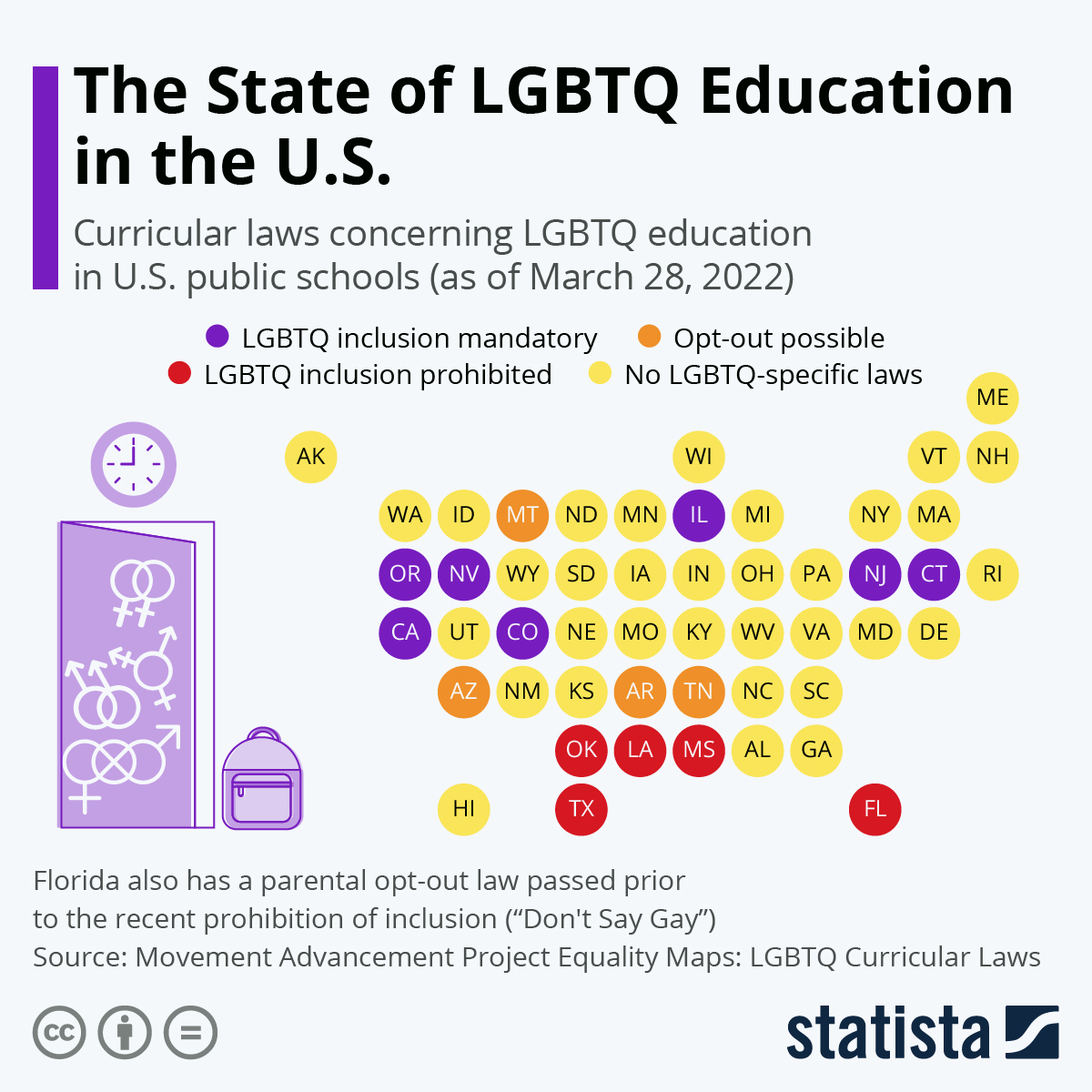
While some states have worked to get rid of similar restrictions in public schools and also adding legislation making LGBTQ+ curriculums mandatory, Florida's move could be the start of a wave of similar legislation in other states.
There are currently 15 similar bills moving through state legislatures across the United States that aim to restrict the use of LGBTQ+ topics in school curriculums, instruction, textbooks, who can be hired, and what teachers can talk about in the classroom, the Hill reports.
For example, a bill in Tennessee would ban schools from using textbooks or materials "that promote, normalize, support, or address lesbian, gay, bisexual, or transgender (LGBT) issues or lifestyles," according to EducationWeek.org.
And a bill in Louisiana would keep teachers or any school employee from discussing topics of sexual orientation or gender identity through 8th grade. This bill would also keep students from discussing their own orientation or gender identity.

Additionally, there is also growing state legislation to restrict transgender bathrooms and participation in sports.
An Alabama bill recently passed in the state senate, aiming to stop instruction on sexuality and gender and require students to use school bathrooms and locker rooms that match the sex listed on their birth certificate, according to Alabama.com.
South Carolina's House of Representatives also recently passed a bill that would ban transgender students from playing in girls' or women's sports in public schools and colleges, according to CBS News. If the bill passes the state senate and is signed into law, the state would join several others in mandating that transgender students compete with the gender assigned on their birth certificates.

Click to see more

Click to see more

Click to see more

Opponents across the nation are pushing to keep these kinds of bills from passing in state legislatures.
"They divide schools and businesses when those should be safe spaces to learn and earn a living," Barbara Simon, head of news and campaigns for the LGBTQ+ media advocacy group GLAAD, told Changing America.
Nearly 200 state bills have been filed nationwide by Republican lawmakers this year that aim to restrict LGBTQ+ in public schools, according to The Washington Post.
But tracking these bills can be difficult since the words "transgender" or "LGBTQ" are often not mentioned. Some of the bills are also vaguely worded, making it confusing as to who specifically cannot discuss certain issues at school.
There are also court challenges to existing laws in an effort to get them repealed.
The Biden administration says it will take steps to block state actions that discriminate against LGBTQ+ youth and their families, reports The Washington Post.
In the case of Florida's bill, U.S. Education Secretary Miguel Cardona publicly gave his support for teachers, parents, and students in response to the passage of the 'Don’t Say Gay' bill.
While some organizations and companies have also publicly denounced the passing of this kind of legislation, advocates argue more pressure needs to be applied to keep these bills from passing in state governments.
Check out The China Report, our new weekly newsletter. Subscribe here!
