- Home
- China
- World
- Asia-Pacific
- Americas
- Europe
- Middle-East and Africa
- Politics
- Business
- Opinions
- Tech & Sci
- Culture
- Sports
- Travel
- Nature
- Picture
- Video
- Live
- TV
- Documentary
- Radio
- Specials
- Learn Chinese


Share







Copied
Click to see more
Click to see more
Click to see more
Click to see more
Click to see more
Is the U.S. Supreme Court blurring the division between church and state?
Following recent SCOTUS decisions, some are questioning the legitimacy of the nation's highest court.
Last Friday, SCOTUS overturned Roe v. Wade, a 1973 landmark ruling establishing the constitutional right to an abortion in the U.S.
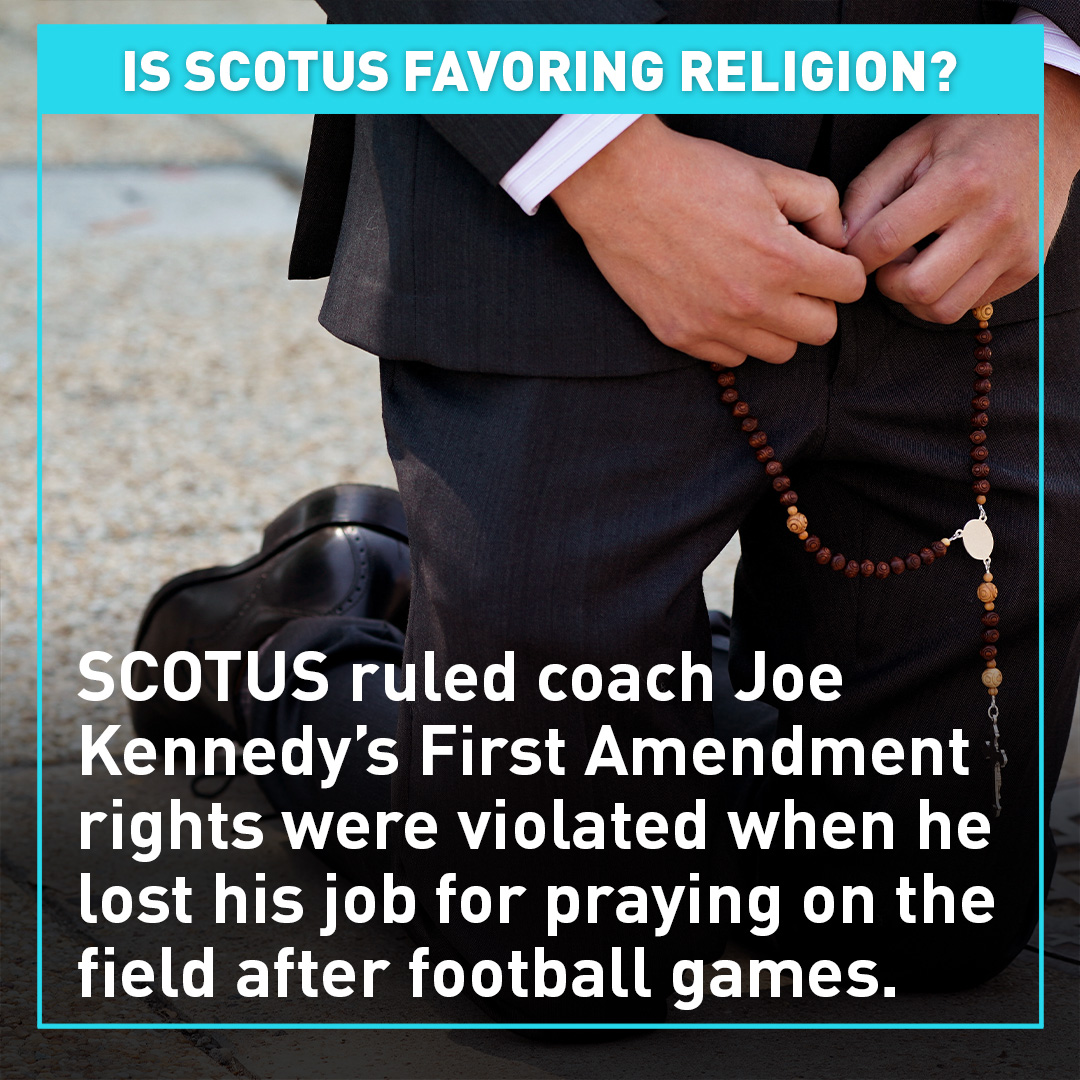
On Monday, the court majority sided with a Washington state football coach, saying the school district violated his First Amendment rights when he lost his job for praying on the field after football games.
Justices voted 6-3 in favor of coach Joe Kennedy, voting along conservative-liberal ideological lines in Kennedy v. Bremerton School District.
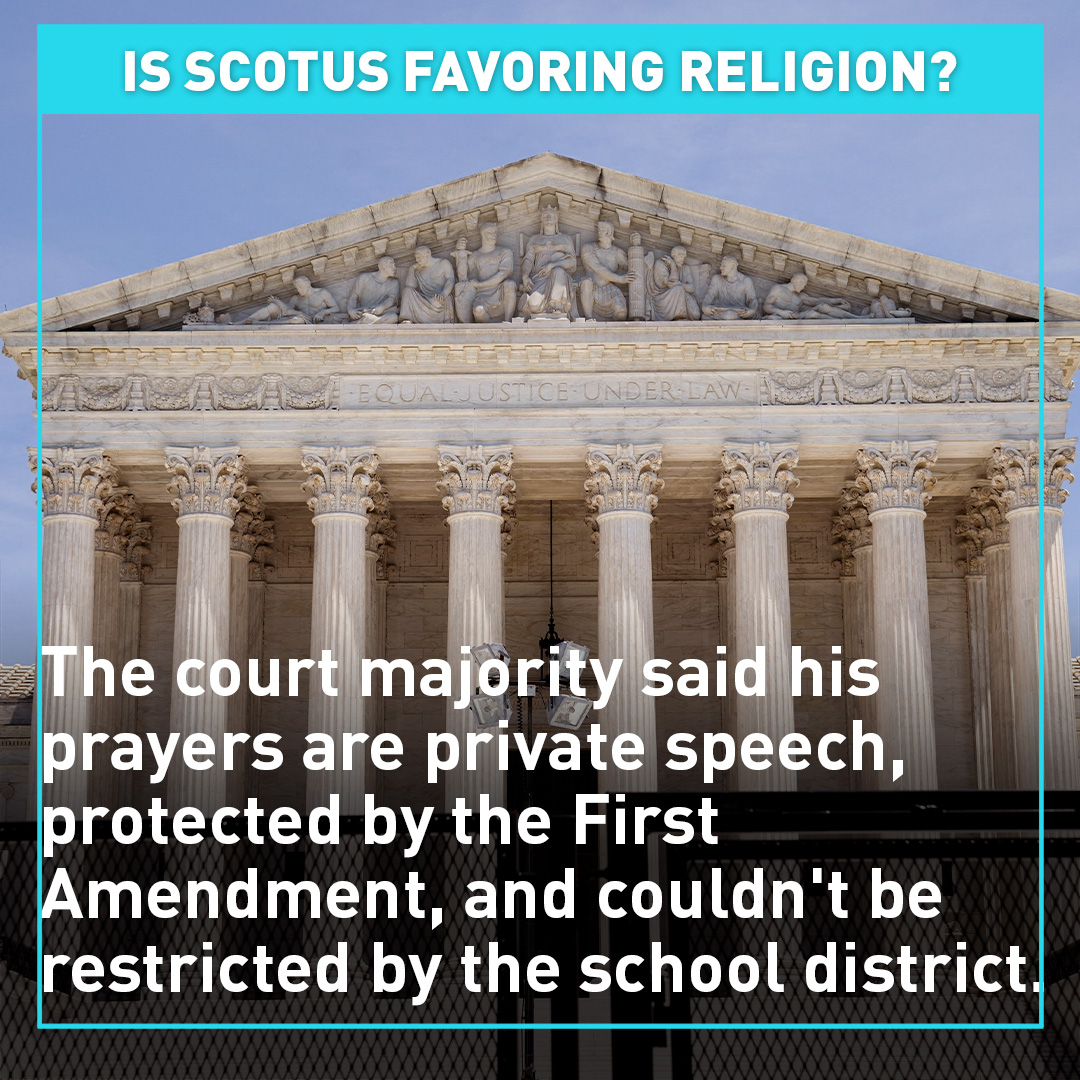
The court majority said his prayers are considered private speech, are protected by the First Amendment, and couldn't be restricted by the school district.
"Here, a government entity sought to punish an individual for engaging in a brief, quiet, personal religious observance doubly protected by the Free Exercise and Free Speech Clauses of the First Amendment," wrote Justice Neil Gorsuch in the majority opinion.
Gorsuch also said the football coach was acting as a private person, not a school employee, while praying after games.
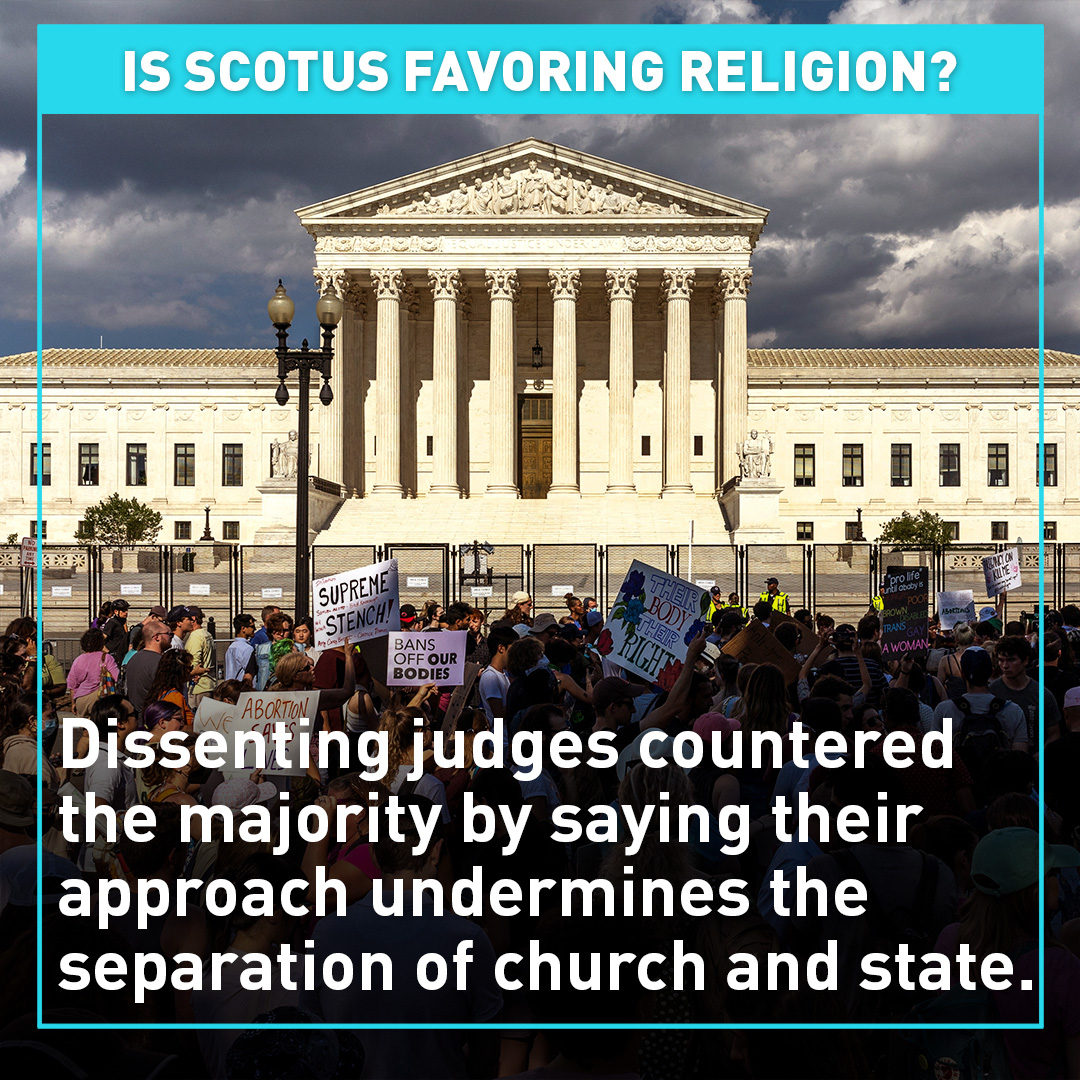
Dissenting judges countered the majority by saying their approach undermines the separation of church and state.
Justices Sonia Sotomayor, Stephen Breyer and Elena Kagan argued the court majority failed to see how students could be motivated to alter their behavior to win a coach's approval.
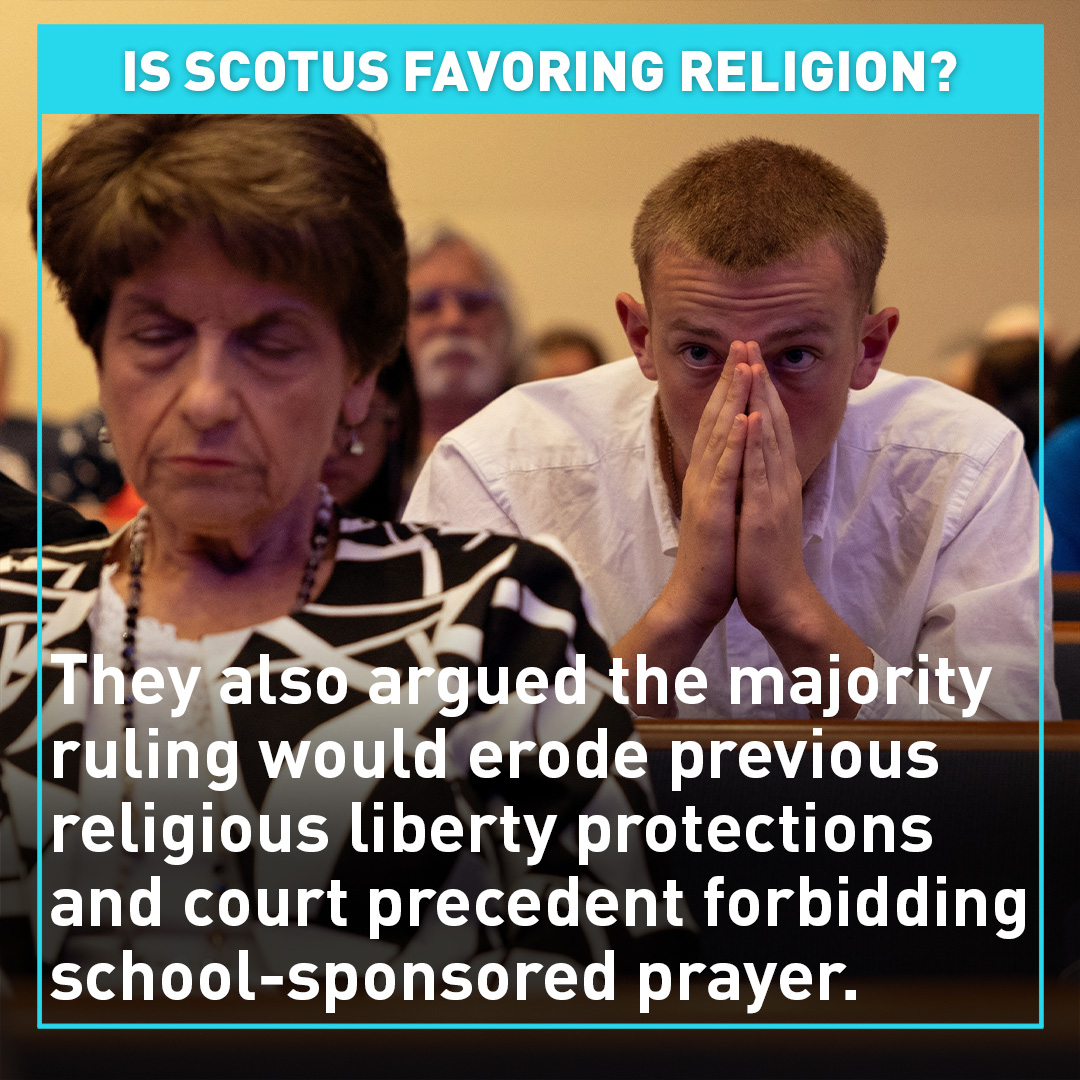
They also argued the majority ruling would erode previous religious liberty protections and court precedent forbidding school-sponsored prayer.
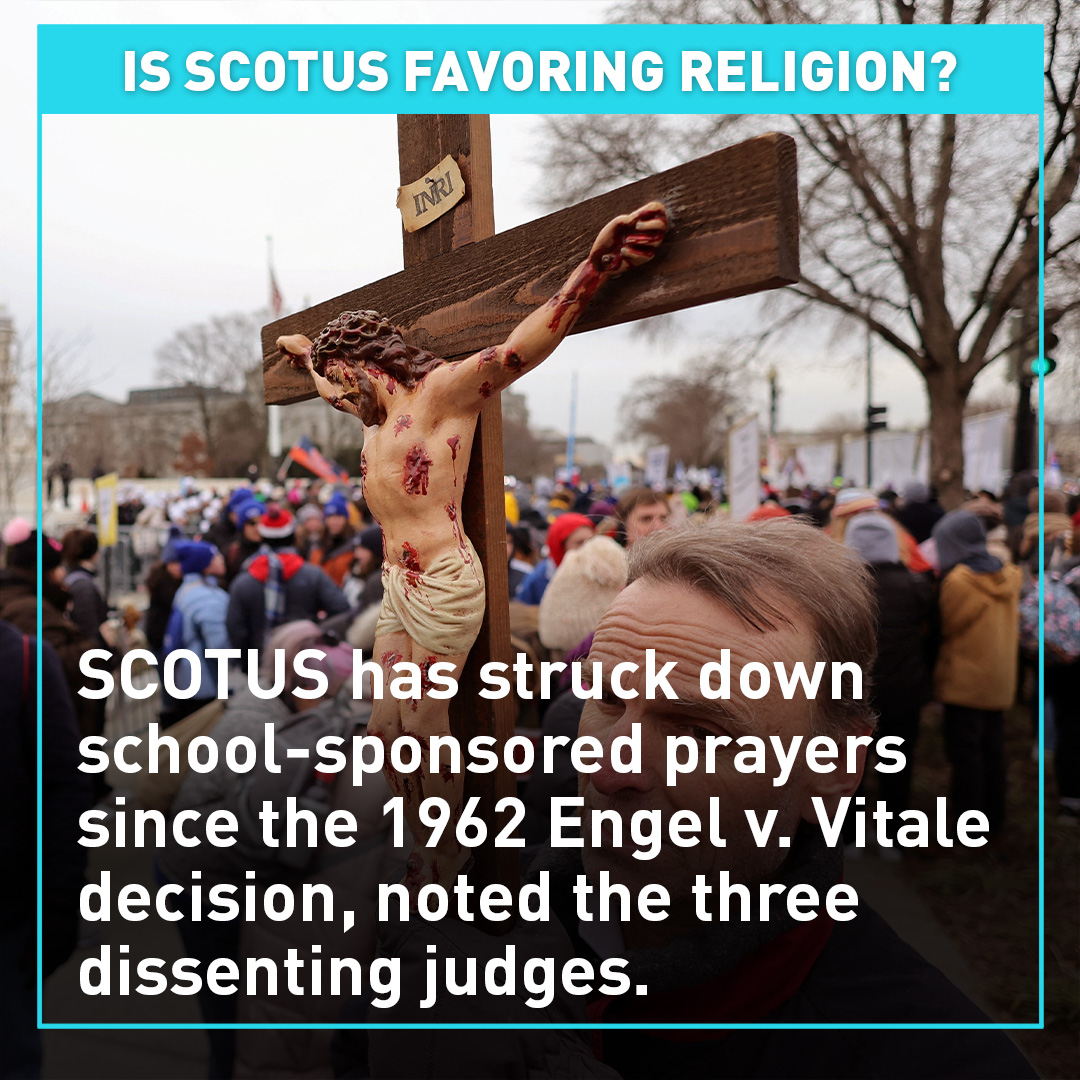
SCOTUS has struck down school-sponsored prayers since the 1962 Engel v. Vitale decision, noted the three dissenting judges. But now the court is on a "different path," in favor of religious exercise, Justice Sotomayor wrote in their dissent.
Justices Sonia Sotomayor, Stephen Breyer and Elena Kagan were also the three justices who dissented in Friday's Dobbs v. Jackson Women’s Health Organization ruling that overturned Roe v. Wade.
In their decision for Kennedy v. Bremerton School District, the court choose to focus on how the nation’s founders would interpret the constitution, instead of using the so-called 'Lemon test,' referring to the precedent established in the 1971 Lemon v. Kurtzman ruling. This method of interpretation calls on courts to determine whether a "reasonable observer" would consider government action an endorsement of religion, according to Bloomberg Law.
"In place of Lemon and the endorsement test, this Court has instructed that the Establishment Clause must be interpreted by reference to historical practices and understandings," wrote Gorsuch in Kennedy v. Bremerton School District.
Some experts argue these methods of interpretation are ambiguous and can be manipulated by judges to support their own agenda.
"The idea is that instead of asking whether some hypothetical reasonable observer might think the government is endorsing religion, as courts had to ask under the Lemon and endorsement tests, courts can, instead, ask whether the challenged government action shares the characteristics of an establishment" of religion "at the time of the Founding," Asma Uddin of the nonprofit Freedom Forum, told Bloomberg Law.
Other recent court rulings have also reflected a conservative leaning court.
For example, last week SCOTUS ruled the state of Maine could not exclude religious schools from tuition assistance programs.
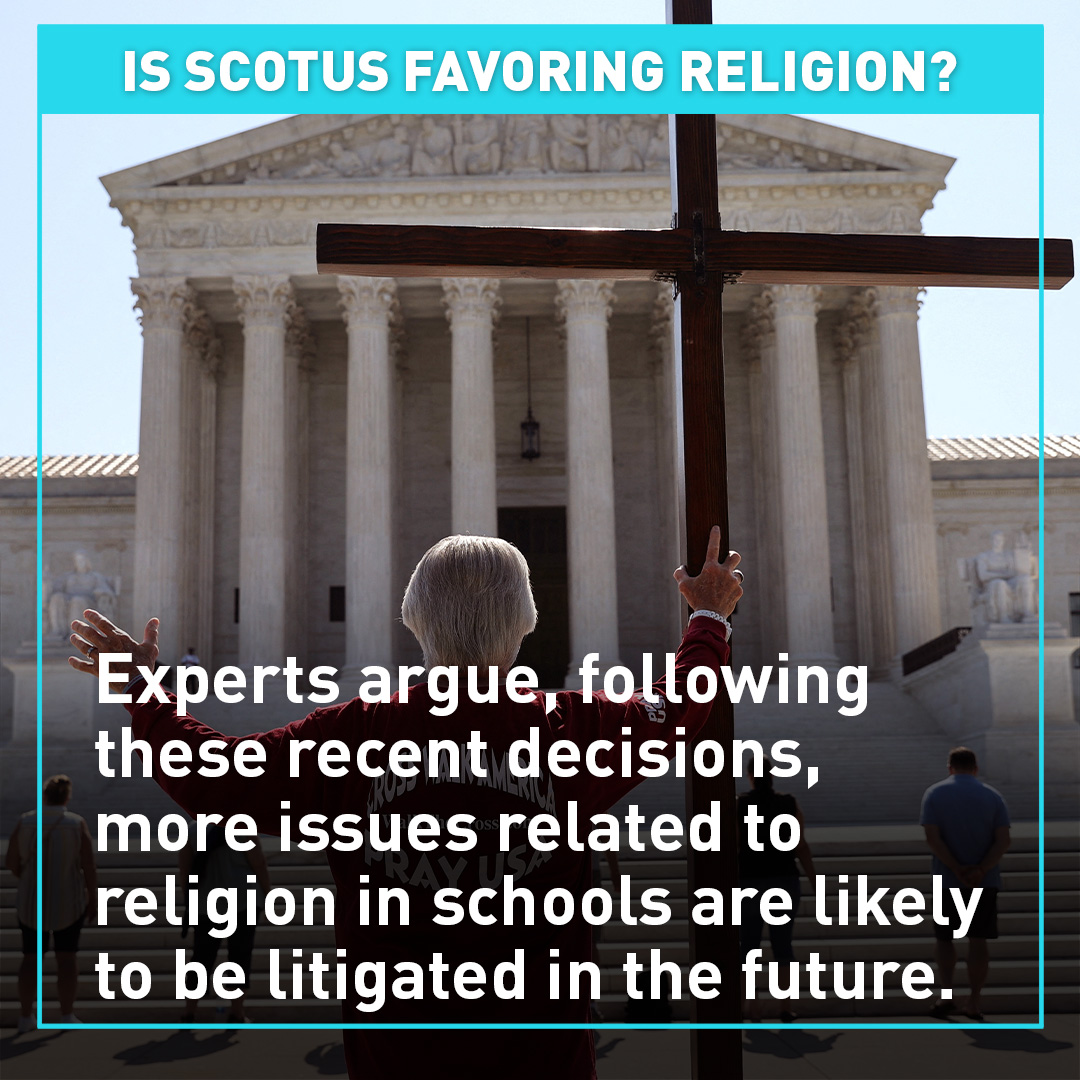
Experts also argue, following these recent decisions, more issues related to religion in schools are likely to be litigated in the future.
For more, check out our exclusive content on CGTN Now and subscribe to our weekly newsletter, The China Report.
