- Home
- China
- World
- Asia-Pacific
- Americas
- Europe
- Middle-East and Africa
- Politics
- Business
- Opinions
- Tech & Sci
- Culture
- Sports
- Travel
- Nature
- Picture
- Video
- Live
- TV
- Documentary
- Radio
- Specials
- Learn Chinese


Share







Copied
Click to see more
In the wake of the latest mass shooting in the U.S., some are questioning why is it common for mass shooters to be young men.
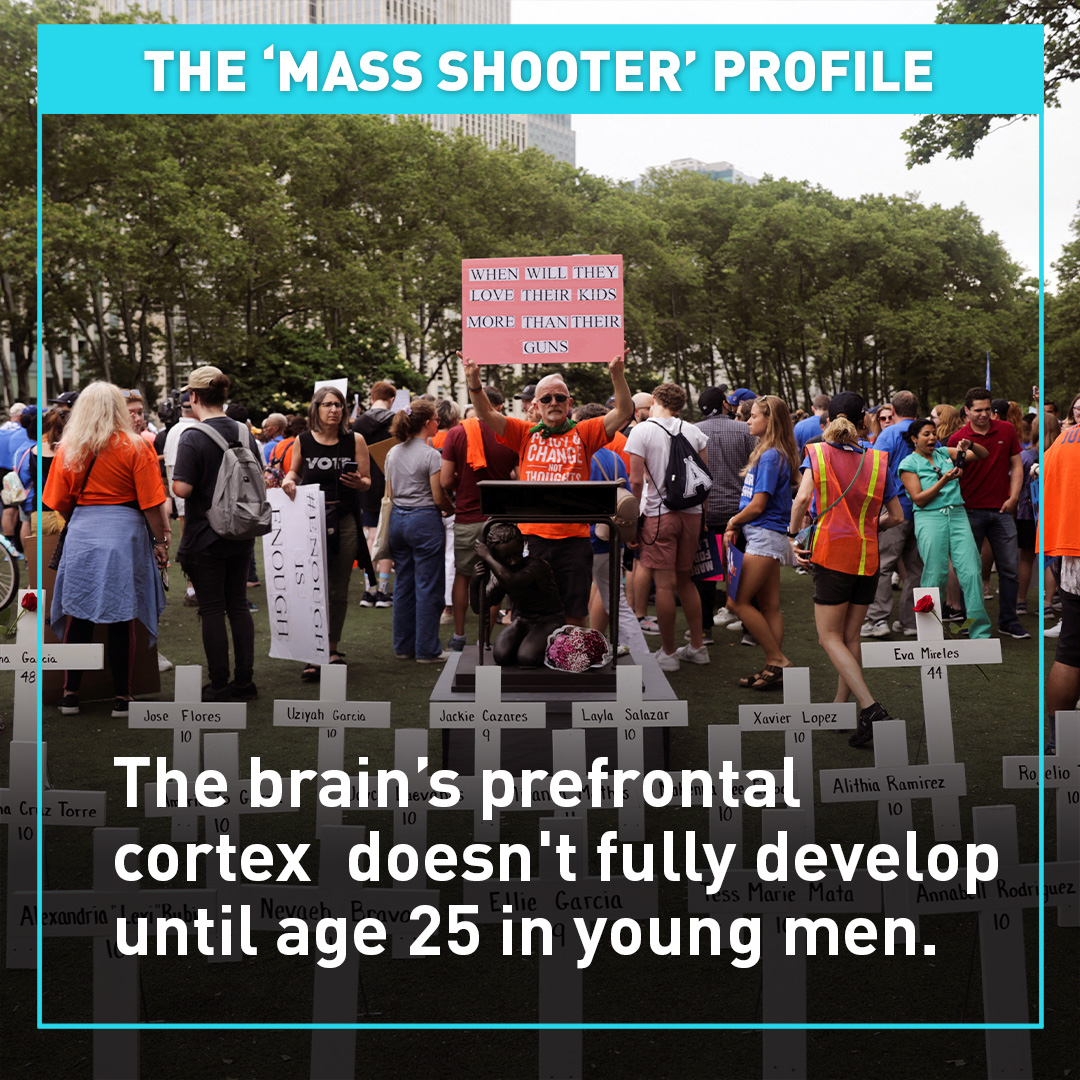
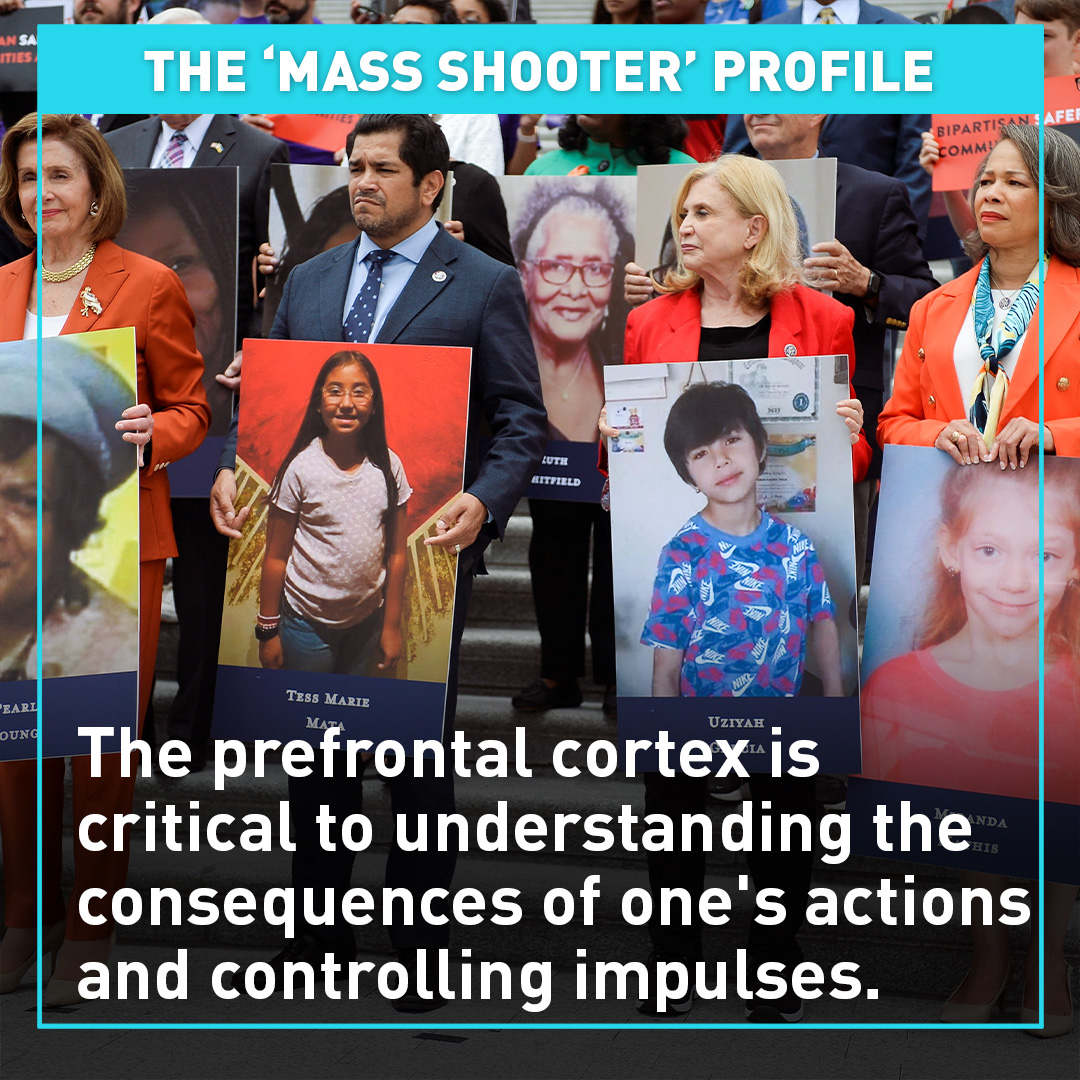
Several studies show the prefrontal cortex in the brain, which is critical to understanding the consequences of one's actions and controlling impulses, doesn't fully develop until age 25 in young men.
Following a mass shooting at a Fourth of July parade in suburban Illinois, gun control legislation is once again in the national spotlight.
On Monday, 21-year-old Robert Crimo III, opened fire on the parade, killing seven people and injuring dozens of others.
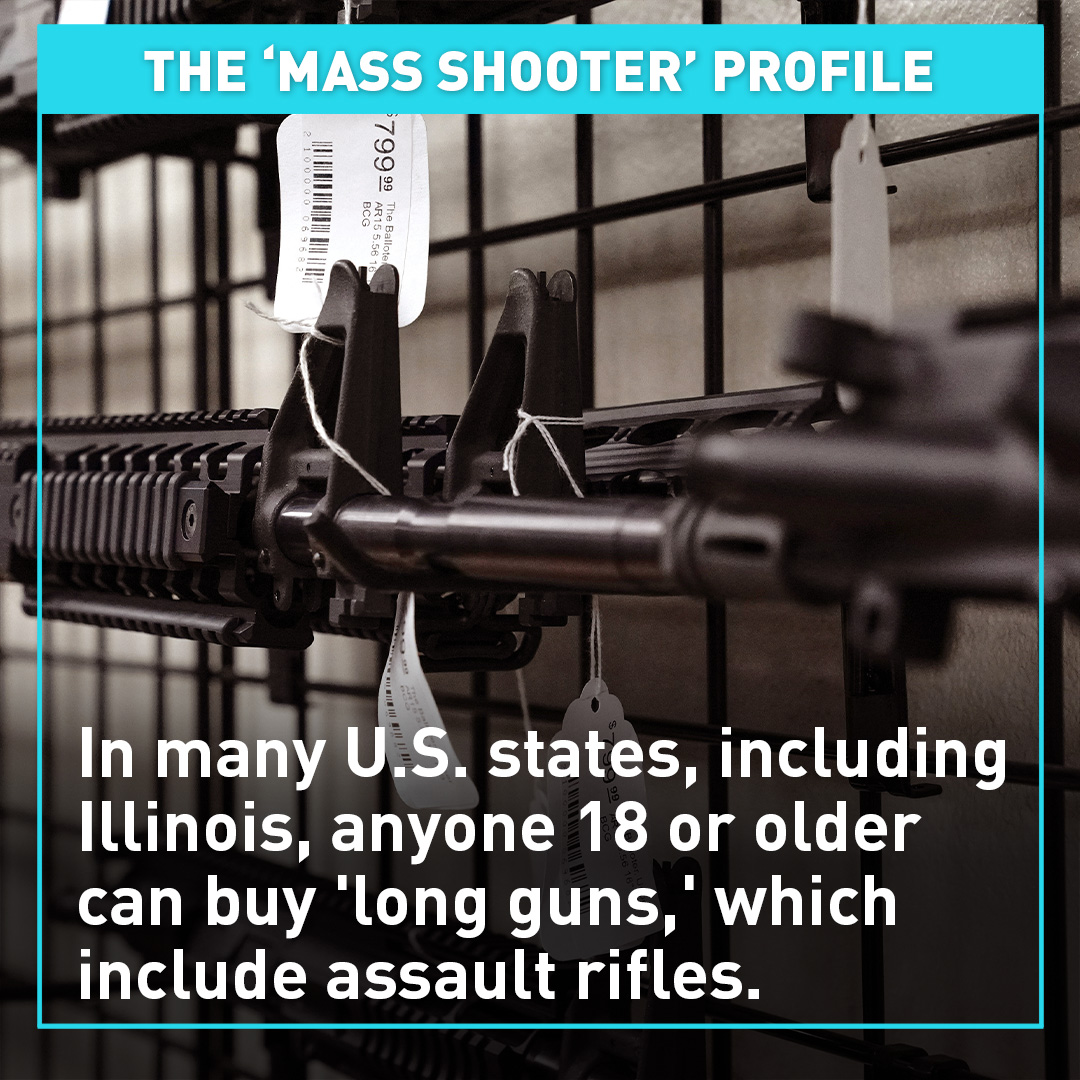
In many U.S. states, including Illinois, anyone 18 or older can buy 'long guns,' which include assault rifles.
The Lake County Sheriff’s Department says Crimo legally bought the high-powered AR-15 style rifle they believe he used in the attack.
Authorities also say Crimo had four more legally bought weapons. They found a second rifle in the car Crimo was driving and three more guns were seized from his dad's home.
Crimo passed four background checks to buy his weapons at 19-years-old, according to Illinois State Police. Since he was under the age of 21, his father sponsored his application at the time.
He was approved for a gun license despite concerning encounters with police, including a call to police from a family member saying Crimo threatened to kill everyone in the house. Authorities said no charges were filed by the family but police seized 16 knives, a sword and a dagger, ABC News reports.
Click to see more
Click to see more
Gun activists and U.S. President Joe Biden have called on Congress to take action toward gun control and implement an assault weapons ban. Biden has also said, if a ban is not possible, the purchasing age of a gun should be raised to 21.
After the 2018 shooting at Marjory Stoneman Douglas High school in Parkland, Florida, six states raised the purchasing age for long guns to 21.
In Florida, that legislative change is being challenged in the state Supreme Court.
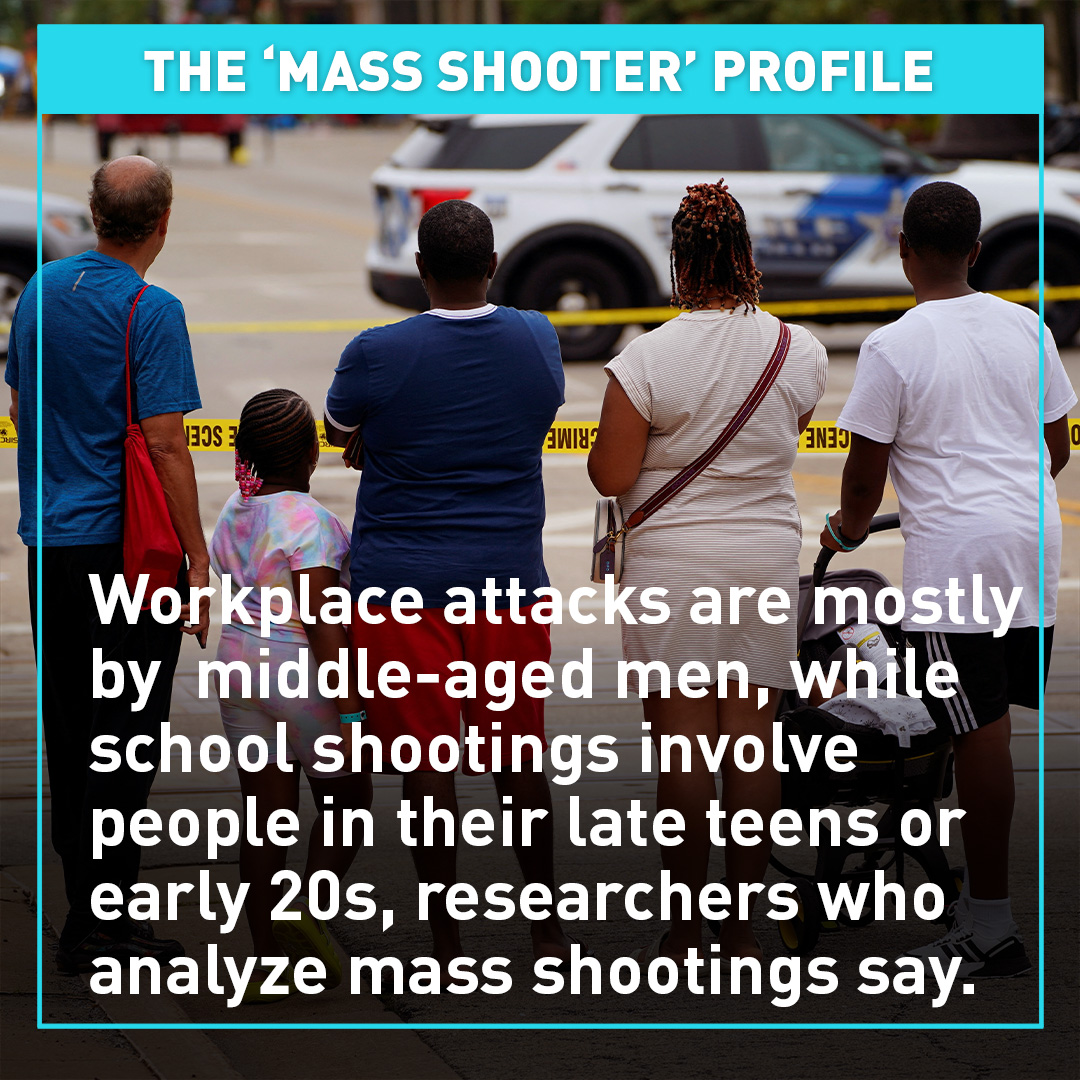
Workplace attacks are mostly carried out by middle-aged men, while school shootings involve people in their late teens or early 20s, according to Jillian Peterson, an associate professor of criminology at Hamline University, and James Densley, a professor of criminal justice at Metro State University.
Men in these two age groups also have higher suicide rates, mostly using firearms, says Peterson.
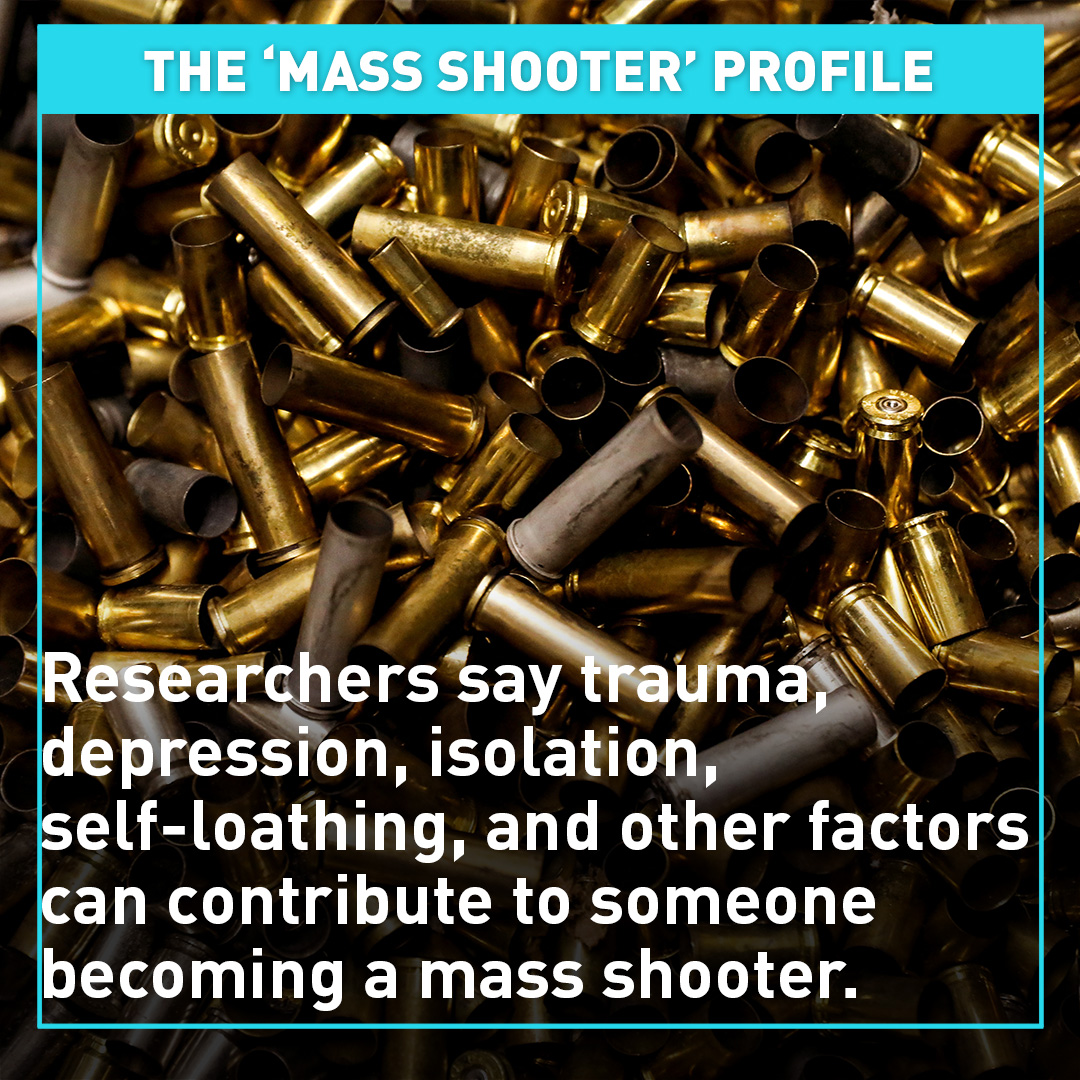
Both researchers analyze the lives of mass shooters and have built a database of every mass shooter since 1966. Their work indicates similarities among mass shooters.
Peterson argues, "I think it is this kind of coming out of adolescence: not knowing your place in the world, and being depressed and isolated and more vulnerable to what you are reading online," the Post reports.
She adds, early childhood trauma appears to be a foundation to future school shooters. That trauma builds toward isolation, despair and self-loathing and can turn into a personal crisis.
Experts also suggest these young shooters are trying to regain control using a "masculine" solution to solve their frustrations and can have fantasies of "unlimited power and greatness."
Many mass shooters don't survive the shooting, and are killed in the police response.
While experts say there are often signs of distress in young men before they carry out a mass shooting, they are also difficult to 'predict.'
People react to stress and trauma differently, and although mass shooters may fit a certain profile, there are also many others with similar characteristics who are not mass shooters, the Post reports.
For more, check out our exclusive content on CGTN Now and subscribe to our weekly newsletter, The China Report.
