
Share







Copied
On Thursday, April 20, United Nations Secretary-General Antonio Guterres appealed for a three-day ceasefire in Sudan to mark the Muslim holiday of Eid al-Fitr. He said it would enable trapped civilians to escape, seek medical treatment, food and other essentials.
More than 300 people have been killed and more than 3,000 wounded in Sudan since fighting between the Sudanese Armed Forces (SAF) and the paramilitary Rapid Support Forces (RSF) broke out April 15.
Here is a look at Sudan’s political turmoil in recent years leading to the current clashes between the army and the main paramilitary group:
December 2018: Hundreds protest in the northern city of Atbara against rising food costs. A broader economic crisis sparks demonstrations that quickly spread to Khartoum and other cities. Security services respond to the protests with tear gas and gunfire.
April 2019: Hundreds of thousands of protesters stage a sit-in outside army headquarters in Khartoum. Within days, the army overthrows and detains Omar al-Bashir ending his 30-year rule. Protesters continue to demand the handover of power to civilians.
June 2019: Security forces raid the army headquarters sit-in. Armed men linked to the RSF militia kill at least 128 people in the capital.
August 2019: Following mediation by the African Union and Ethiopia, civilian leaders supporting the rebellion sign a “constitutional declaration” to share power with the military during a transitional period leading to elections. Following this, Abdalla Hamdok, an economist and ex-UN official, is appointed to lead the government.
December 2019: Ousted president Omar al-Bashir is convicted of corruption and sentenced to two years in a correctional center.
August 2020: Transitional authorities reach a peace agreement with some rebel groups in the western Darfur region and southern areas of South Kordofan and Blue Nile. However, two significant groups do not agree to the terms of the deal.
October 2020: Sudan agrees to normalize ties with Israel in a deal brokered by the U.S., joining other Arab states. Within two months, the U.S. removes Sudan from its list of state sponsors of terrorism.
June 2021: Sudan receives approval for $56 billion in foreign debt relief after implementing economic reforms under the supervision of the International Monetary Fund.
October 2021: Security forces carry out pre-dawn raids, detaining top civilians including Hamdok, following weeks of bitter disagreements between civilian and military factions and a failed coup attempt. Army chief General Abdel Fattah al-Burhan declares that the civilian government and other transitional bodies have been dissolved.
November 2021: Following mass rallies against the coup and suspension of most international financial aid to Sudan, military leaders and Hamdok announce a deal to reinstate him as prime minister. Hamdok returns to his position, he says, to prevent further violence and safeguard economic reforms.
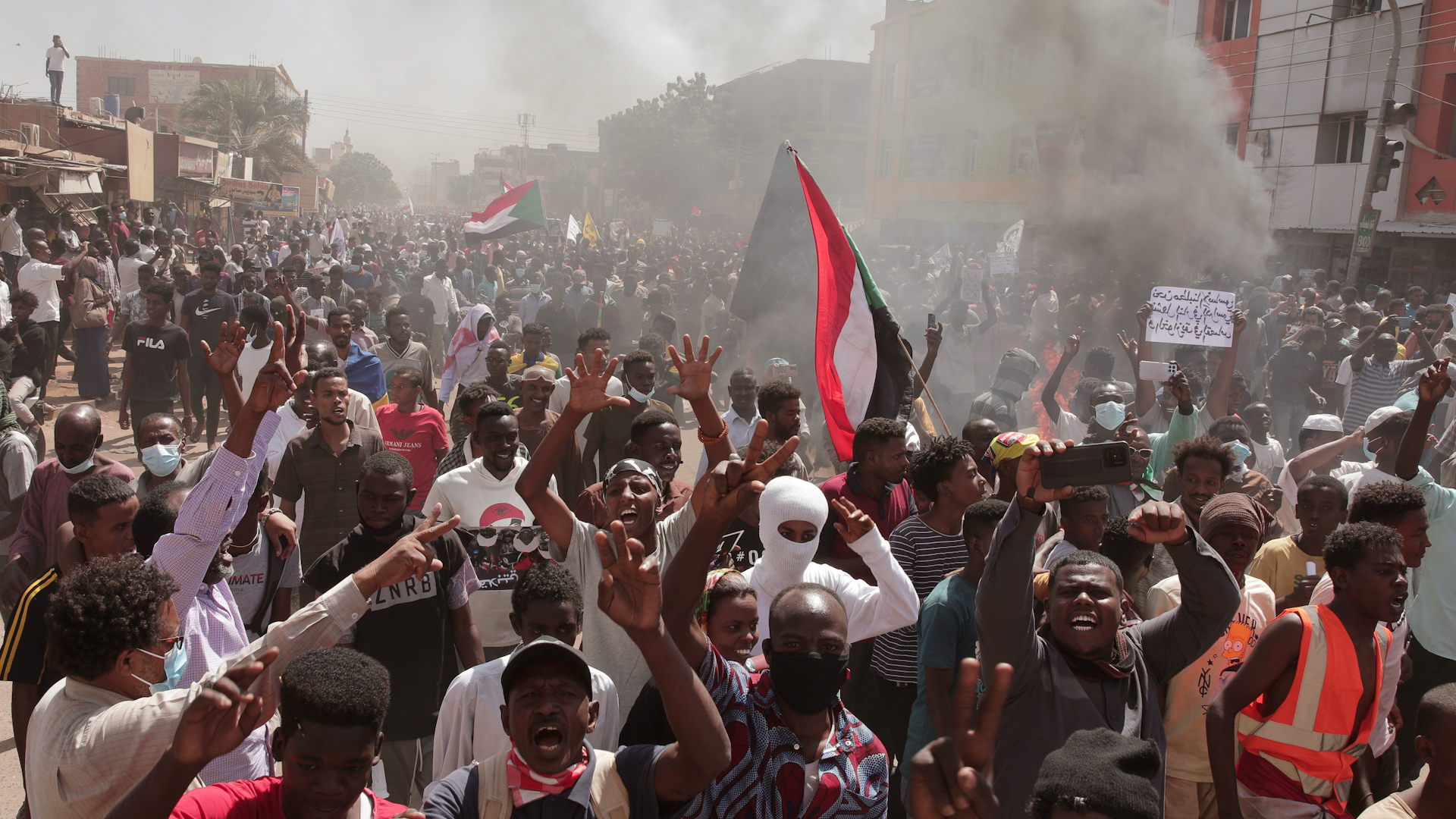
Sudanese demonstrators attend a rally to demand the return to civilian rule nearly a year after a military coup led by General Abdel Fattah al-Burhan, in Khartoum, Sudan, Oct. 25, 2022.
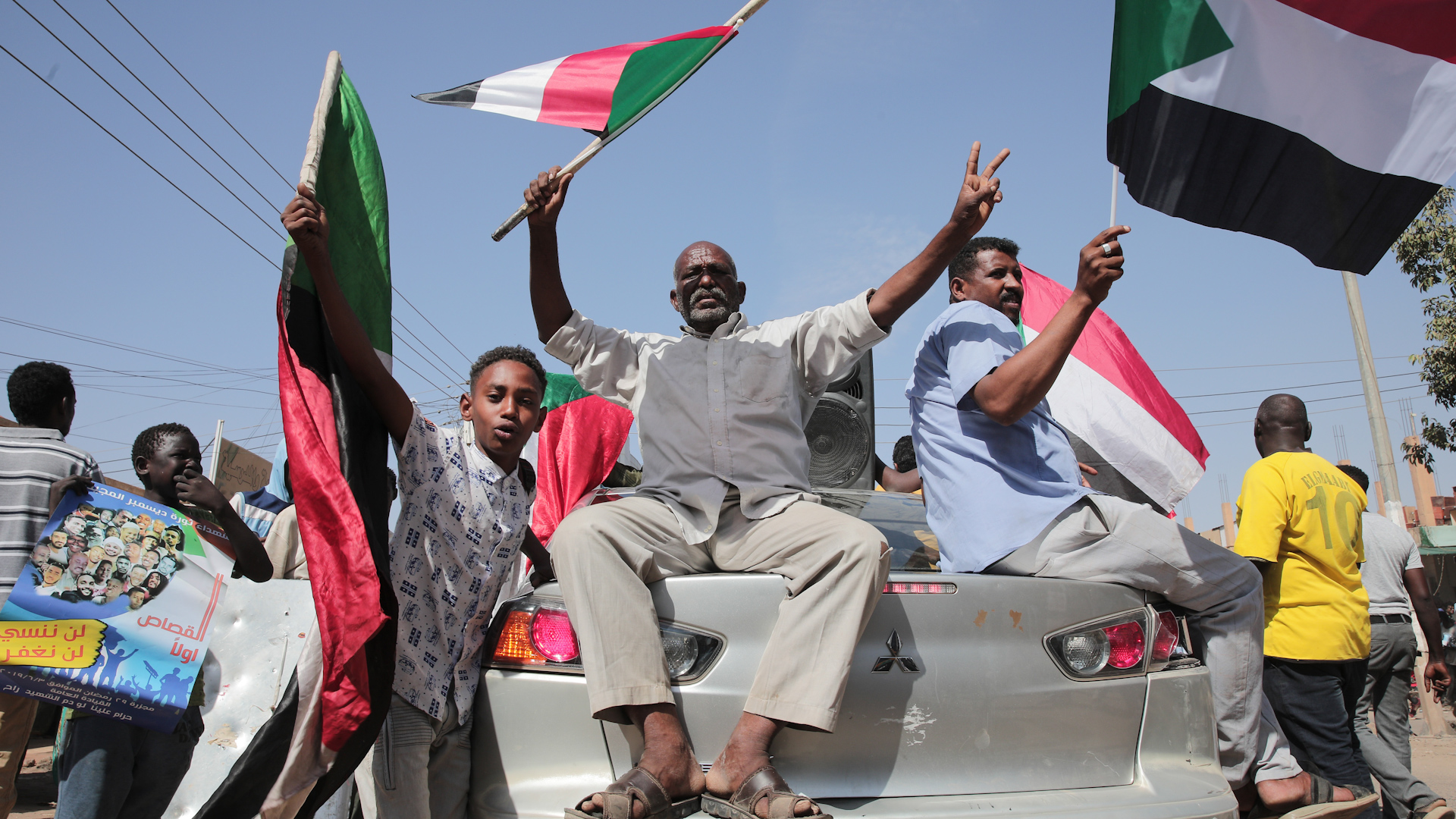
Sudanese demonstrators march in Khartoum, Sudan, Monday, Dec. 19, 2022 to protest a deal signed between the country's main pro-democracy group and its ruling generals, who seized power in an October 2021 coup.
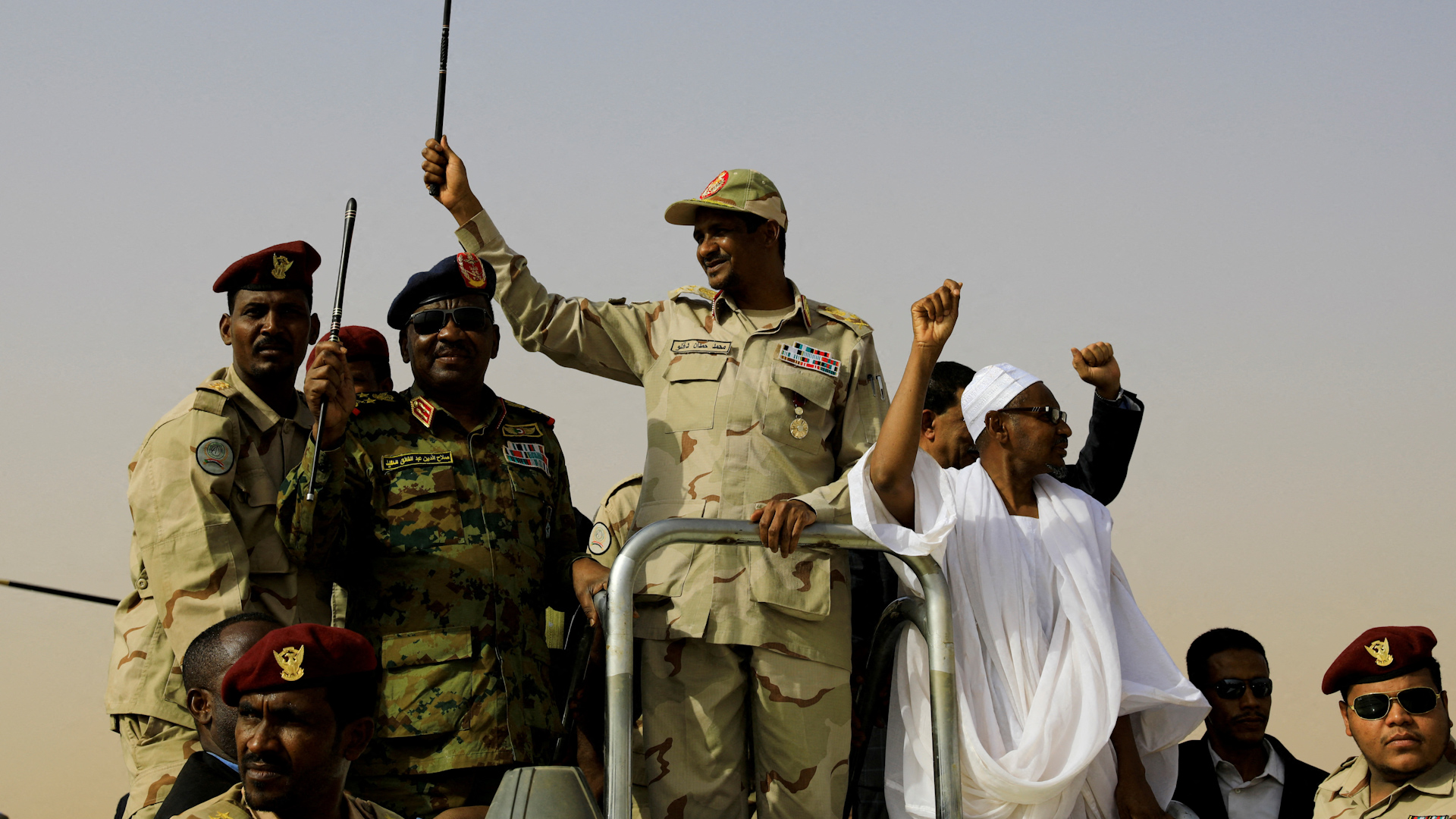
Lieutenant General Mohamed Hamdan Dagalo, deputy head of the military council and head of paramilitary Rapid Support Forces (RSF), greets his supporters as he arrives at a meeting in Aprag village, 60 kilometers away from Khartoum, Sudan, June 22, 2019. REUTERS/Umit Bektas
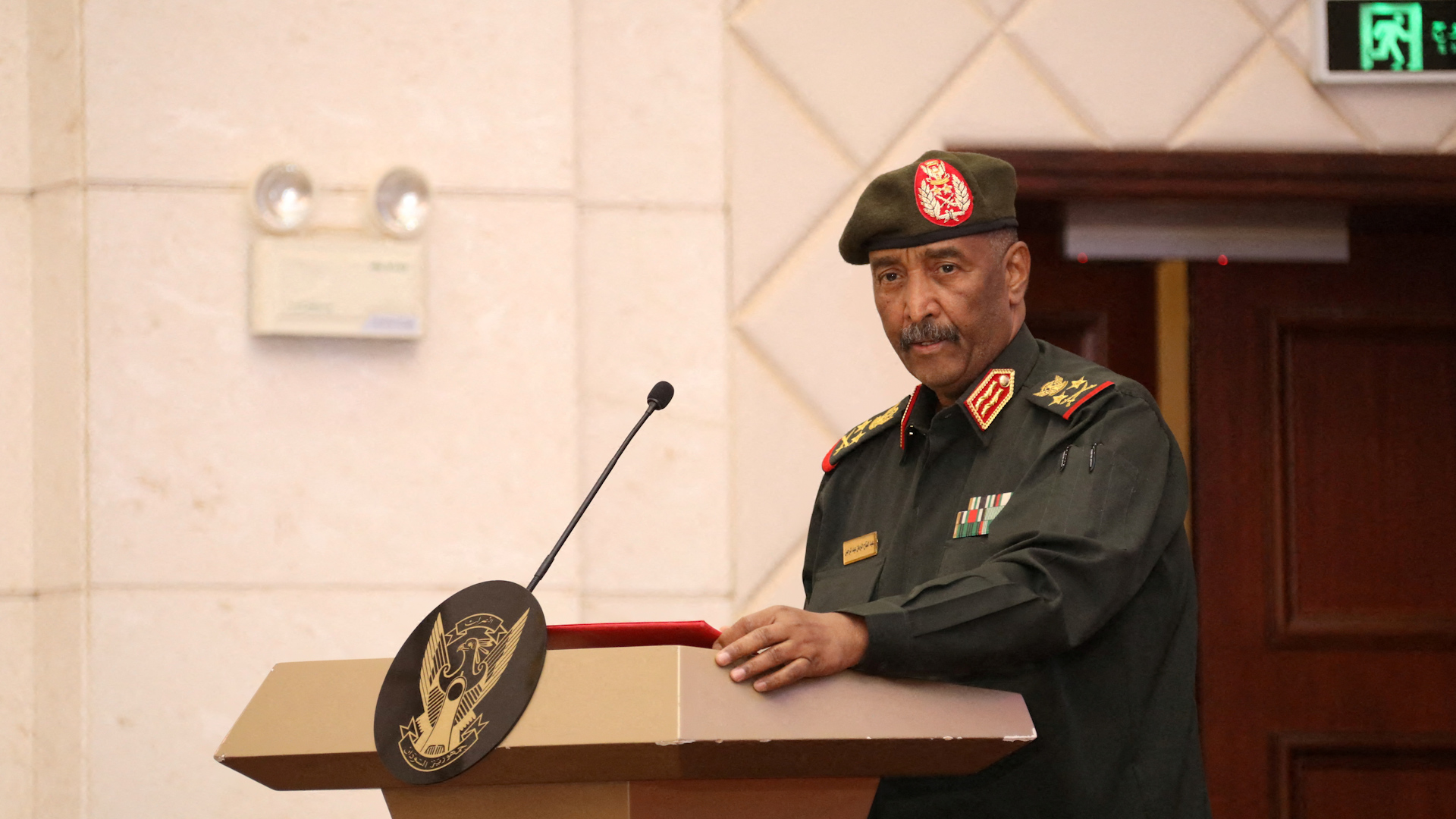
Sudan's military leader General Abdel Fattah al-Burhan stands at the podium during a ceremony to sign the framework agreement between military rulers and civilian powers in Khartoum, Sudan December 5, 2022. REUTERS/El Tayeb Siddig/File Photo
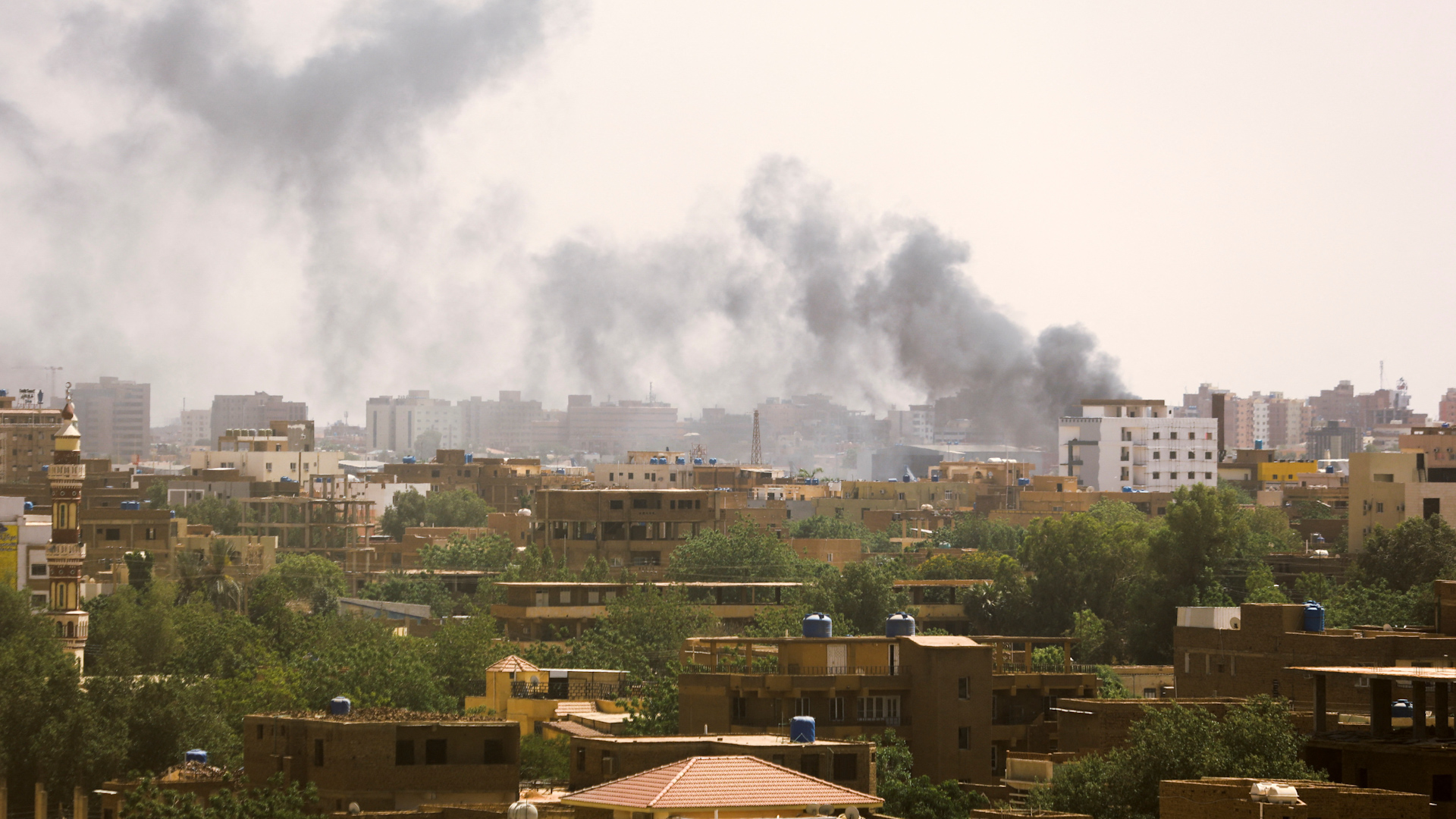
Smoke rises over buildings during clashes between the paramilitary Rapid Support Forces and the army in Khartoum, Sudan April 17, 2023. REUTERS/Stringer
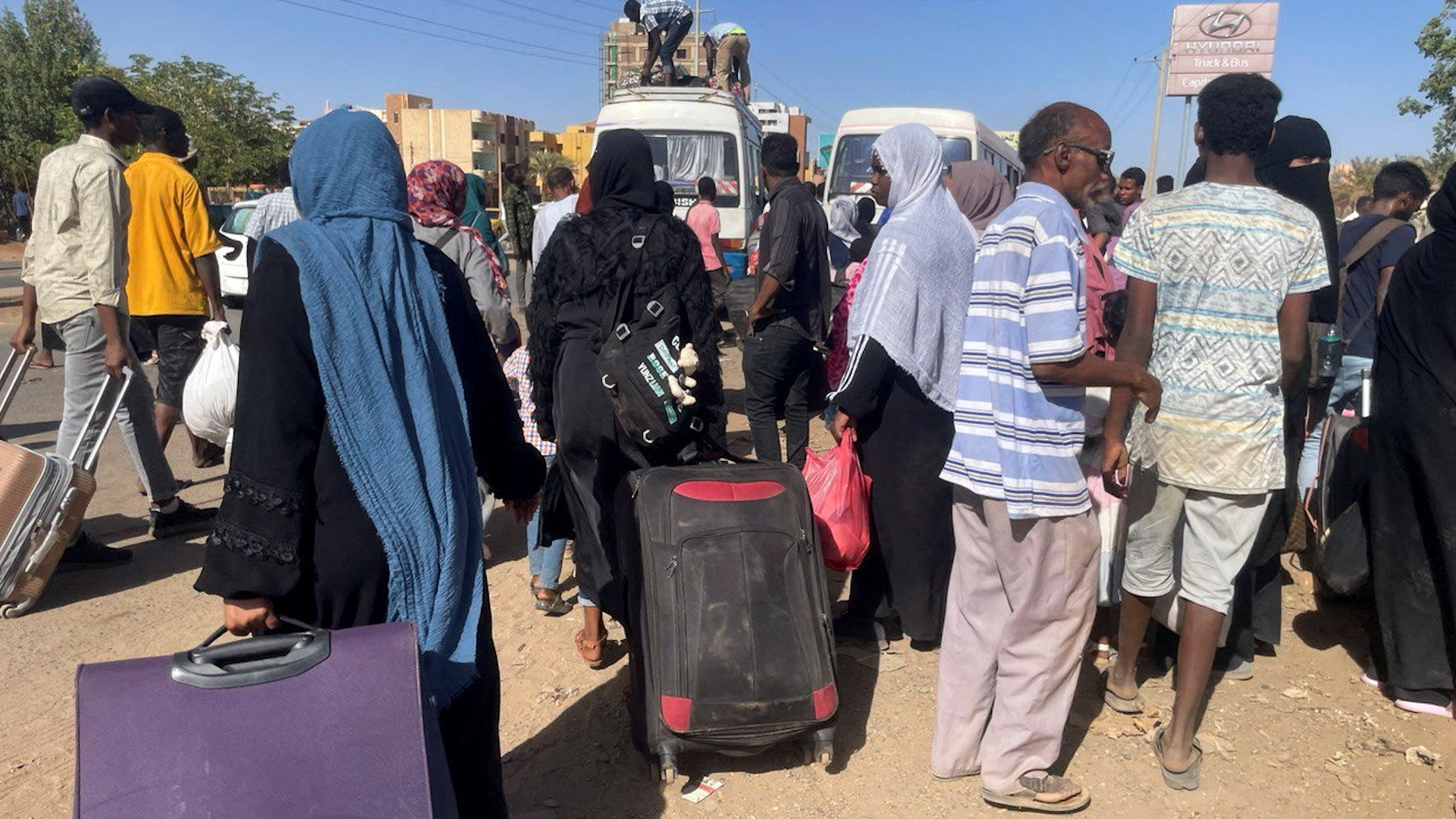
People gather at the station to flee from Khartoum during clashes between the paramilitary Rapid Support Forces and the army in Khartoum, Sudan April 19, 2023. REUTERS/El-Tayeb Siddig
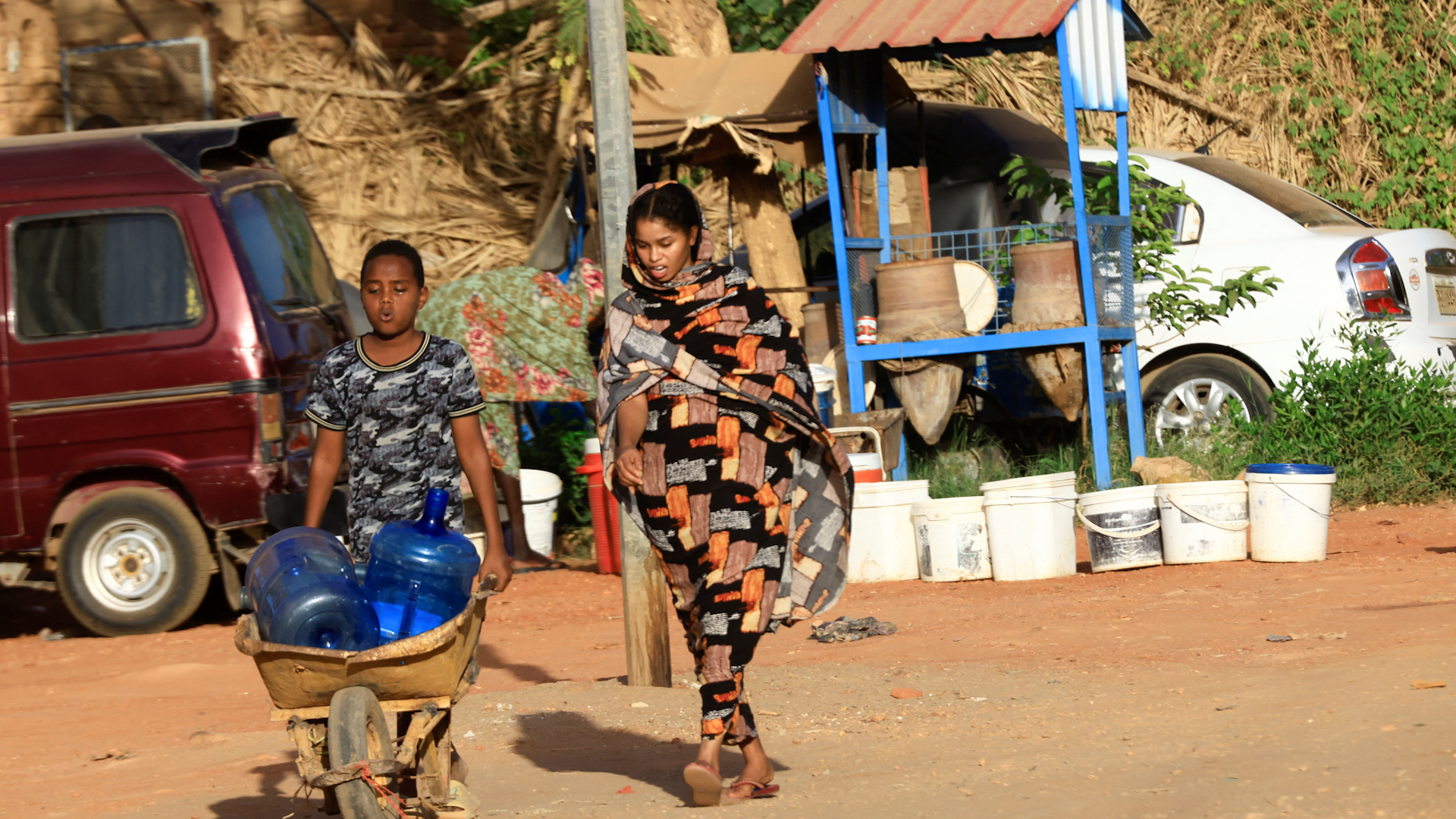
People look for water during clashes between the paramilitary Rapid Support Forces and the army in Khartoum North, Sudan April 20, 2023. REUTERS/Mohamed Nureldin Abdallah
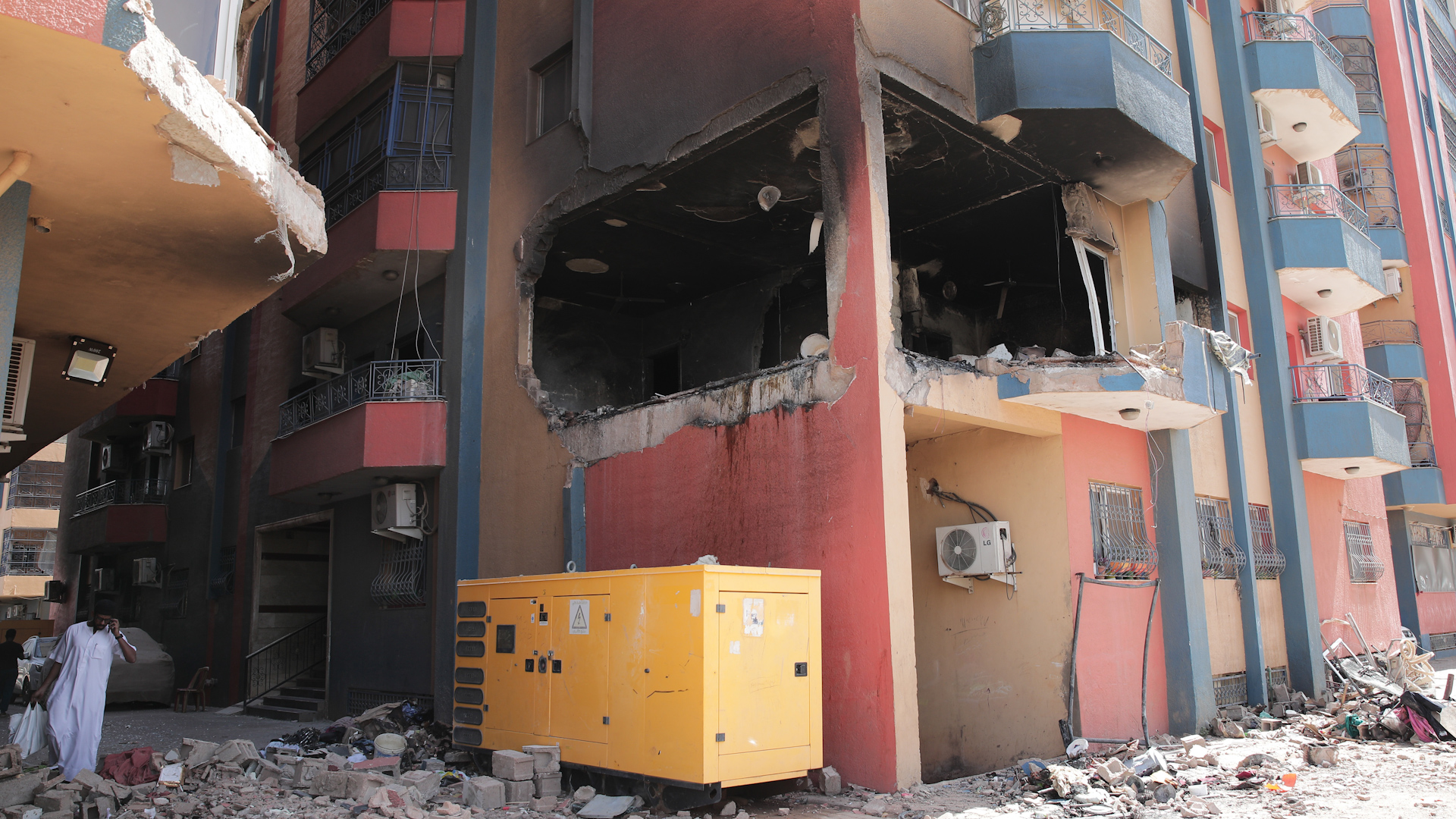
Residential buildings damaged in fighting are seen in Khartoum, Sudan, Thursday, April 20, 2023. The latest attempt at a cease-fire between the rival Sudanese forces faltered as gunfire rattled the capital of Khartoum. Through the night and into Thursday morning, gunfire could be heard almost constantly across Khartoum. (AP Photo/Marwan Ali)
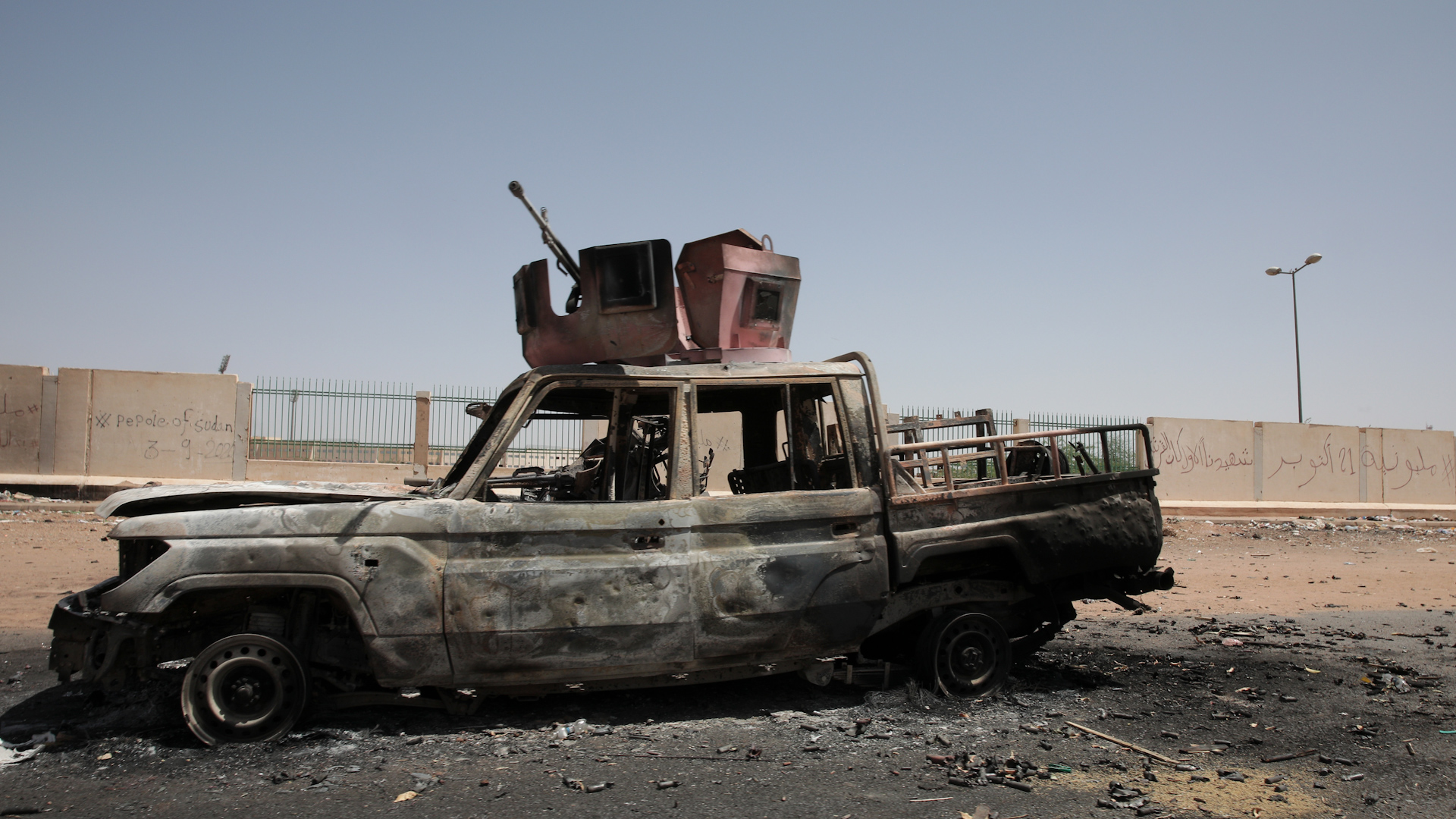
Destroyed military vehicles are seen in southern in Khartoum, Sudan, Thursday, April 20, 2023. The latest attempt at a cease-fire between the rival Sudanese forces faltered as gunfire rattled the capital of Khartoum. Through the night and into Thursday morning, gunfire could be heard almost constantly across Khartoum. (AP Photo/Marwan Ali)
January 2022: Abdalla Hamdok resigns amid continuing demonstrations and his inability to form a new government.
June 2022: The UN World Food Programme says more than a third of Sudan's population faces food insecurity due to ongoing political, economic and climate shocks.
October 2022: On the first anniversary of the coup, Sudan witnesses one of the largest turnouts in the anti-military protest campaign. In Khartoum, demonstrators are met with tear gas and stun grenades, and in the neighboring city of Omdurman, a civilian is killed, making it the 119th recorded protest-related death.
December 2022: An agreement is signed between civilian groups sidelined by the coup and the military to start a new, two-year political transition and appoint a civilian government.
April 2023: The signing of a final agreement for the transition is postponed for a second time due to disputes including the integration of the Rapid Support Forces, a powerful paramilitary group, into the armed forces and the question of placing the army under civilian supervision.
The Sudanese army raises concerns that the mobilization of the RSF could result in confrontation between the two factions.
On April 15, clashes erupt between the Sudanese Armed Forces and the RSF near the army headquarters and airport in Khartoum, as well as other vital military locations throughout the nation.
The SAF conducts air strikes against RSF troops, who retaliate with artillery and anti-aircraft weapons, transforming the central region of Khartoum into a battleground.
For more, check out our exclusive content on CGTN Now and subscribe to our weekly newsletter, The China Report.
Search Trends
SITEMAP
Copyright © 2023 CGTN. 京ICP备16065310号

Disinformation report hotline: 010-85061466
SITEMAP
Copyright © 2023 CGTN. 京ICP备16065310号
Disinformation report hotline: 010-85061466