
Share







Copied

Click to see more
Click to see more

Click to see more
Click to see more
The U.S. Supreme Court voted Thursday to uphold the Indian Child Welfare Act, which gives preference to Native American families in foster care and adoption proceedings of Native children. Some Republican-led states and White families challenged the system in court, arguing it is race based.
Seven out of the nine Supreme Court justices voted in favor of upholding the law.
Justices Clarence Thomas and Samuel Alito dissented.
Tribal leaders involved in the case are calling the ruling a major victory.
The Indian Child Welfare Act was enacted in 1978 to address concerns over Native children too frequently being separated from their families and placed in non-Native homes.
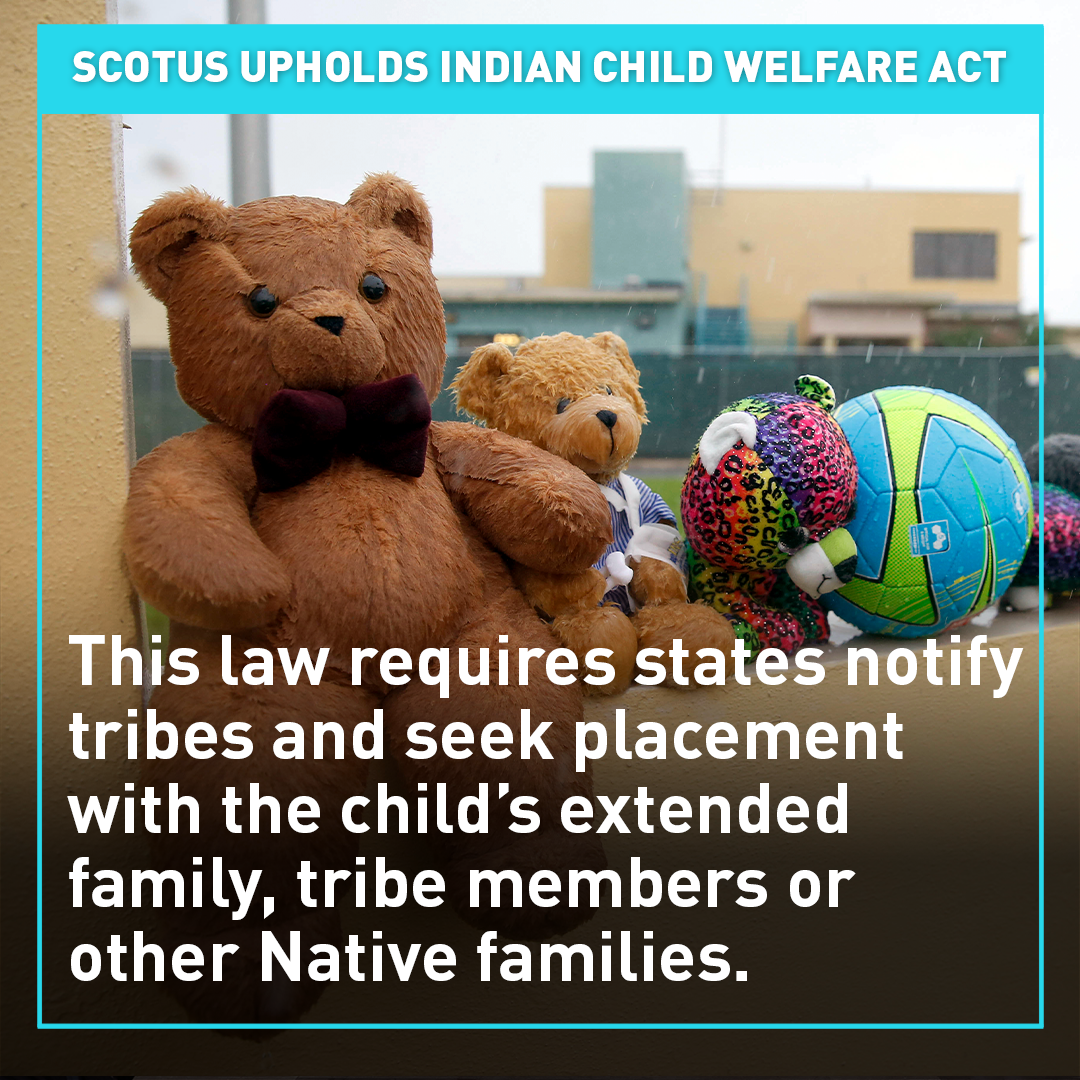
Under this law states are required to notify tribes and seek placement with the child’s extended family, members of the tribe or other Native American families.
Finding foster placement for U.S. children is a nationwide issue.
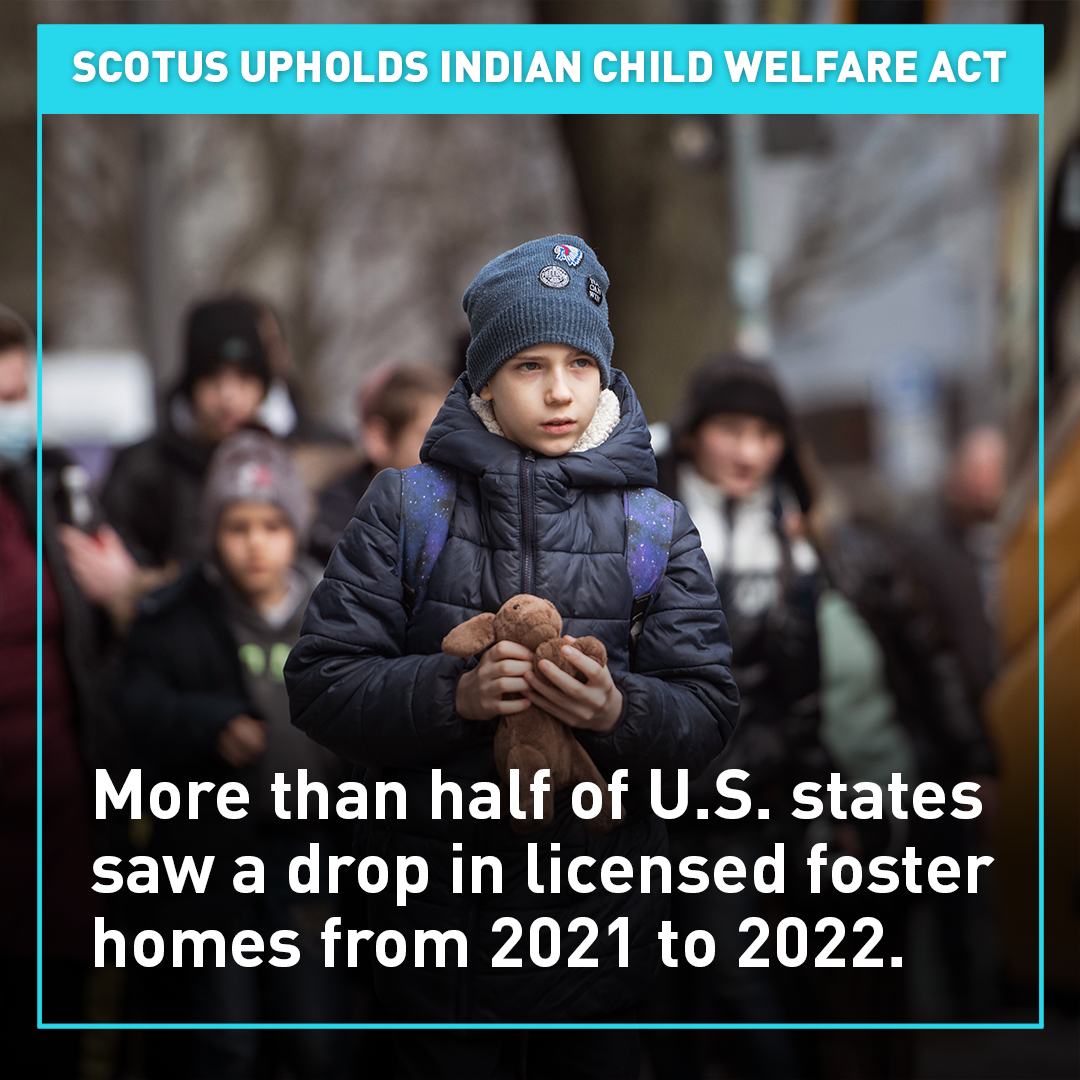
More than half of U.S. states saw a drop in licensed foster homes from 2021 to 2022, according to a report by The Imprint, a nonprofit publication focusing on child welfare and family issues.
Licensed foster homes dropped nearly 18% in Nevada, and 61% in South Carolina, data indicates.
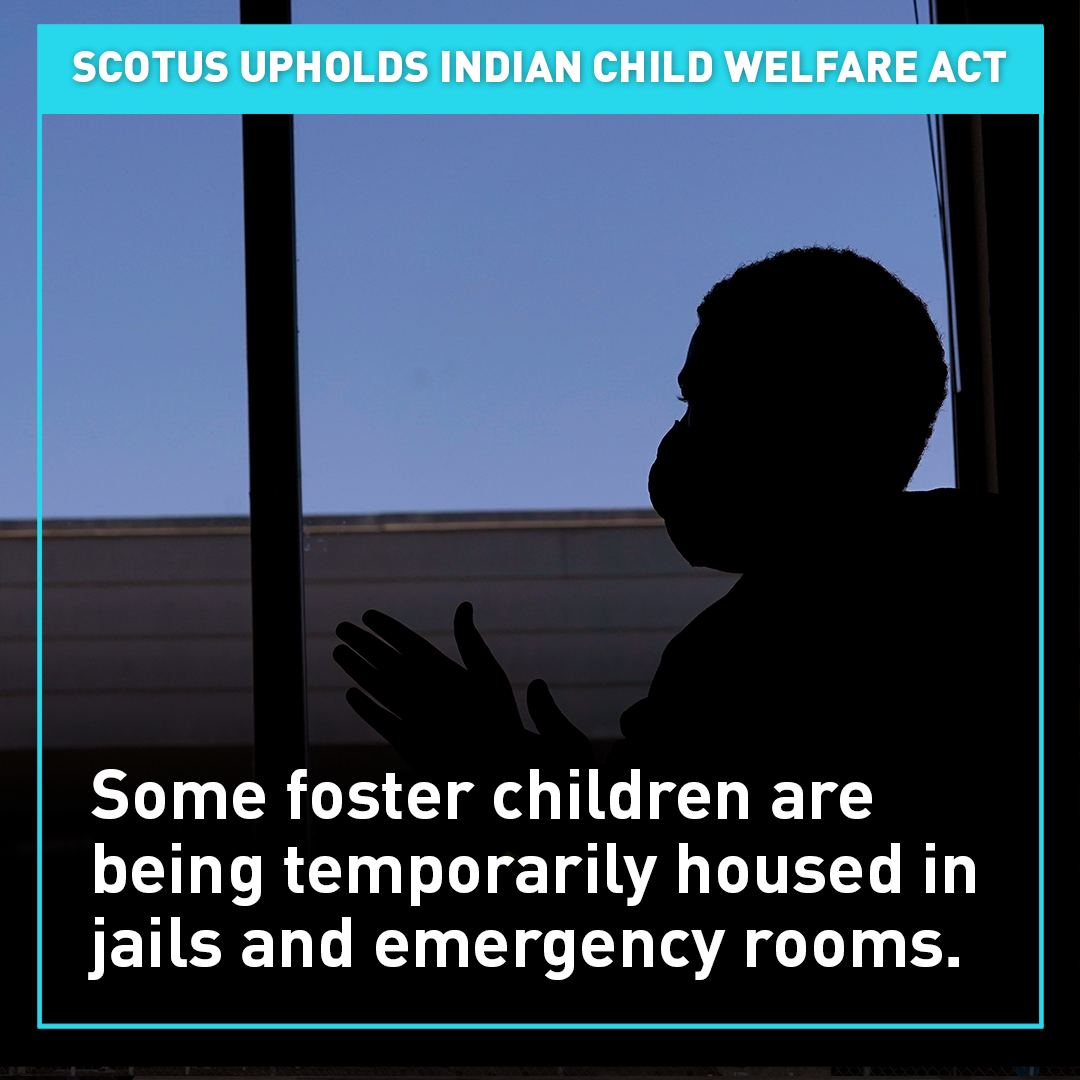
This is leading some foster children to be housed in other places. For example, in North Carolina, children have been temporarily placed in jails and emergency rooms because there aren't enough foster families to take them in, according to Queen City News.
Becoming a licensed foster parent can be a long process. It can take six months or longer, involving lengthy paperwork and background checks.
In some states several hours of training are required as well, in preparation for children with possible emotional or behavioral issues.
Some child advocates suggest there may be ways to ease regulations to encourage more people to become foster parents, but caution that any changes should not compromise the safety of children.
For more, check out our exclusive content on CGTN Now and subscribe to our weekly newsletter, The China Report.
Search Trends
SITEMAP
Copyright © 2023 CGTN. 京ICP备16065310号

Disinformation report hotline: 010-85061466
SITEMAP
Copyright © 2023 CGTN. 京ICP备16065310号
Disinformation report hotline: 010-85061466